Ponda x Berghaus: A New Era of Regenerative Collaboration
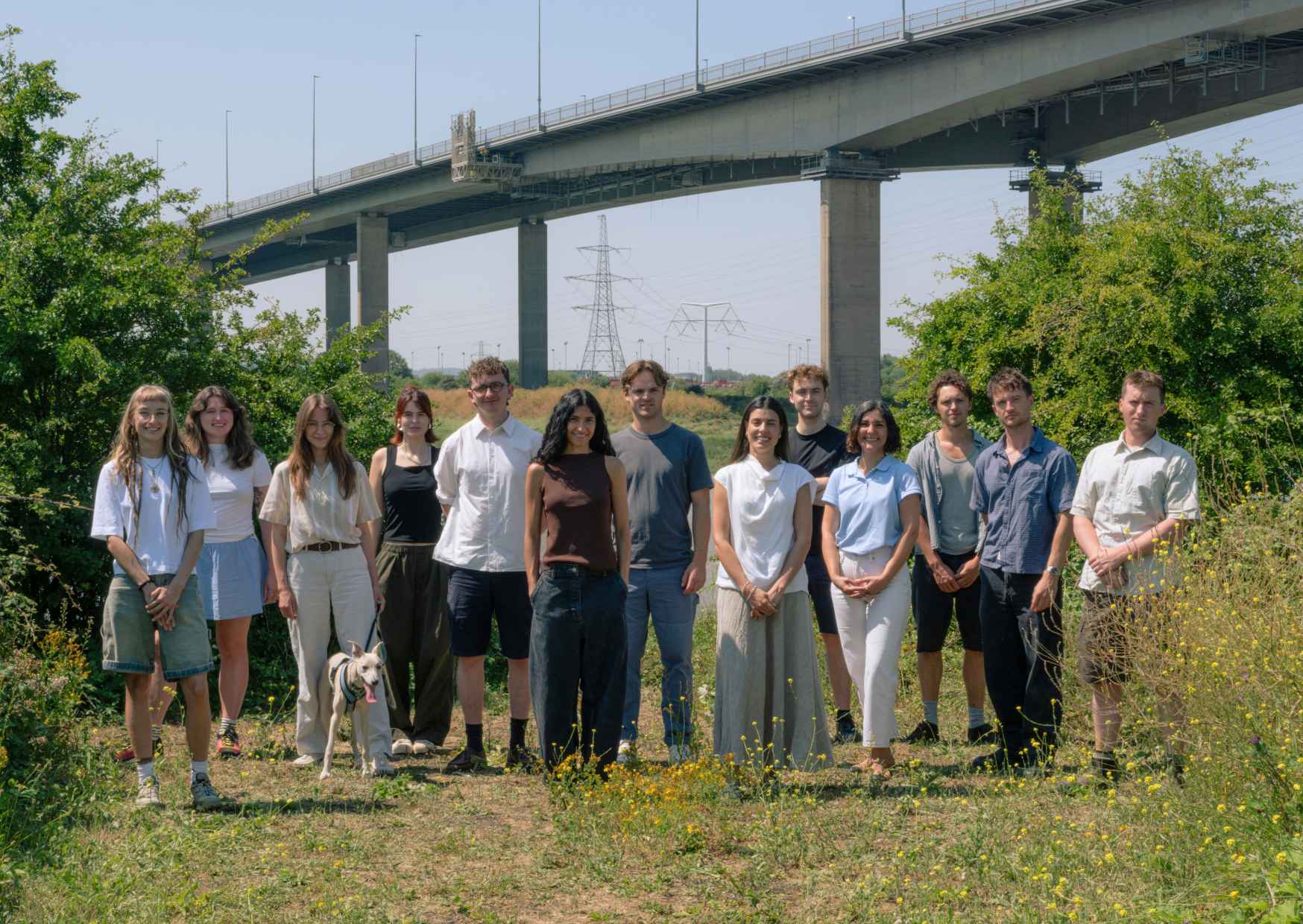
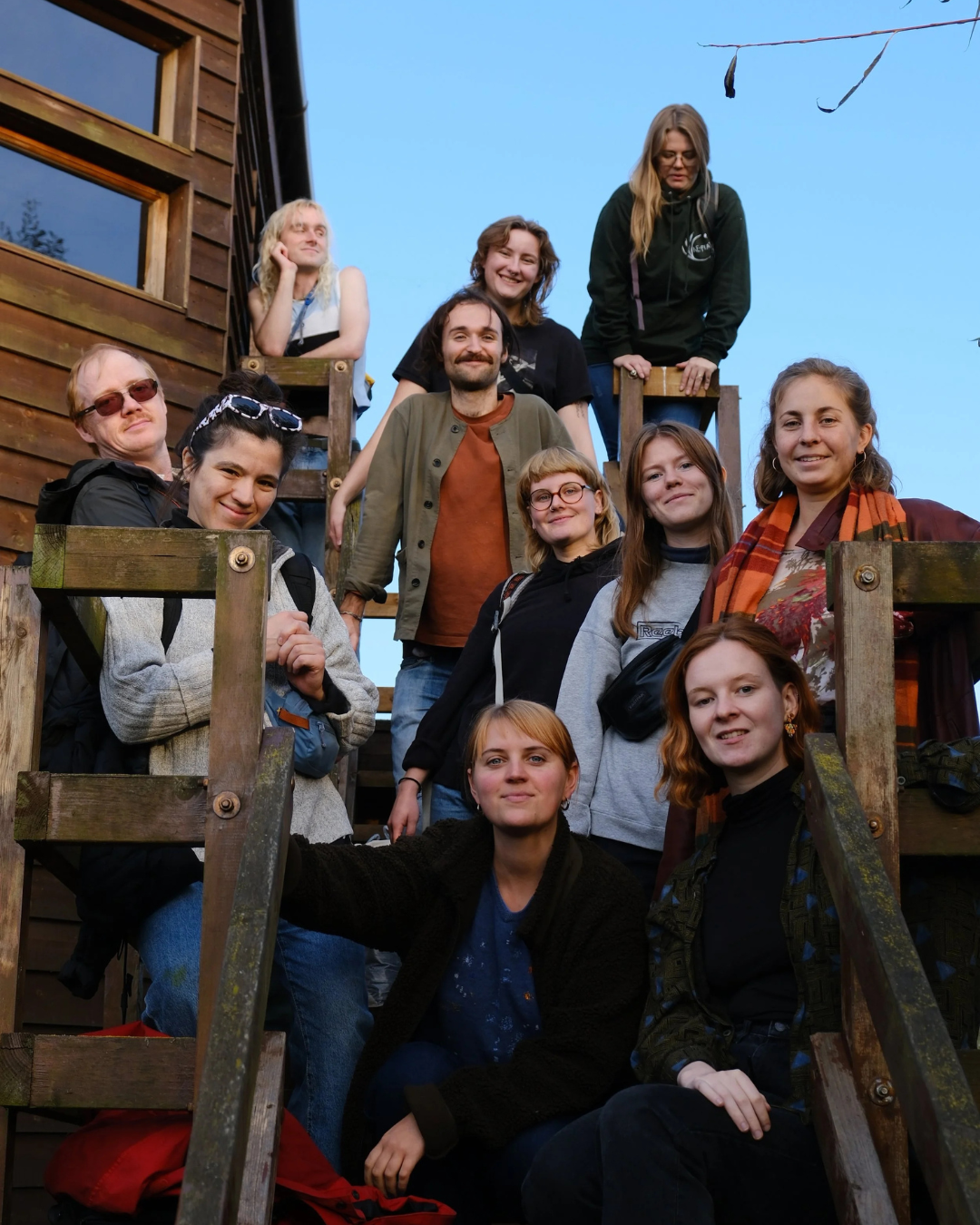
At Ponda, we have long admired the energy, creativity and determination behind RE-PEAT’s work. Their commitment to championing peatlands and the communities who depend on them - feels both urgent and deeply inspiring. RE-PEAT is a youth-led collective working across Europe, using creative advocacy to give peatlands the attention they deserve. Bringing together voices from art, science and activism, its members are united by a shared love for these vital ecosystems and a fierce commitment to protecting them.
Youth-led activism is essential in responding to the climate crisis, and it is always energising to connect with others who care about wetlands as deeply as we do. Over the coming months, we’ll be collaborating with RE-PEAT on a number of projects, but first, we wanted to introduce their brilliant team to the Ponda community. We’re delighted to sit down with them to explore how RE-PEAT began, the role of art in activism, and why peatlands deserve a much louder voice in the climate conversation.
To begin, could you share the story of how RE-PEAT first came to life? Where did the idea spark from, and how did it grow into what it is today? What are your best achievements in this time period?
Looking back now, it’s clear that September 2019 is a sort of BP and AP situation for a few of us: before peatlands and after peatlands. It was at this time that Bethany and Frankie were in Germany for a climate camp, which was set up to protest against a big chemical fertilizer company. They ended up spontaneously joining a peatland excursion and finding out about how vital peatlands are for the climate. On the bus ride home totally transfixed in this new mission, the name “re-peat” jokingly emerged. Since then, more and more people “re-peated” this moment of BP/AP, and so we formed a collective with many time-travelling multi-perspective starting points.
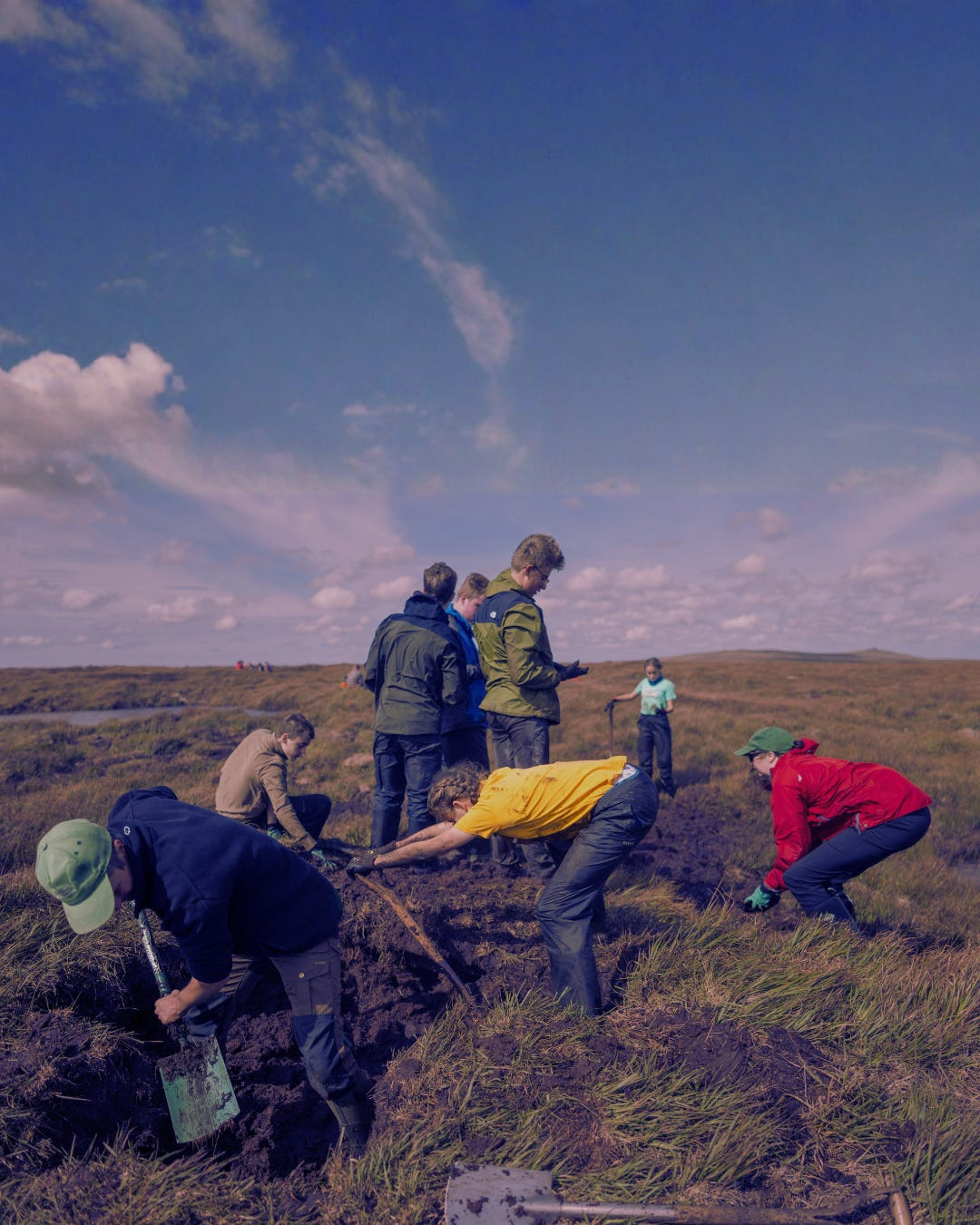
Over the course of the last five years together, we’ve learnt a lot more about peatlands. We have travelled across land and sea to visit them, listened to memories and built our own relationships with these landscapes. We’ve seen the importance of finding playful, metaphorical, collaborative, and imaginative ways of relating with peatlands and sharing their peculiar values. In return, the peatlands have guided us through explorations of grief, deep time, intergenerational thinking, migration, extraction, culture and more.
.png)
Since starting RE-PEAT, what is one of your favourite or most surprising things you’ve learned about peatlands?
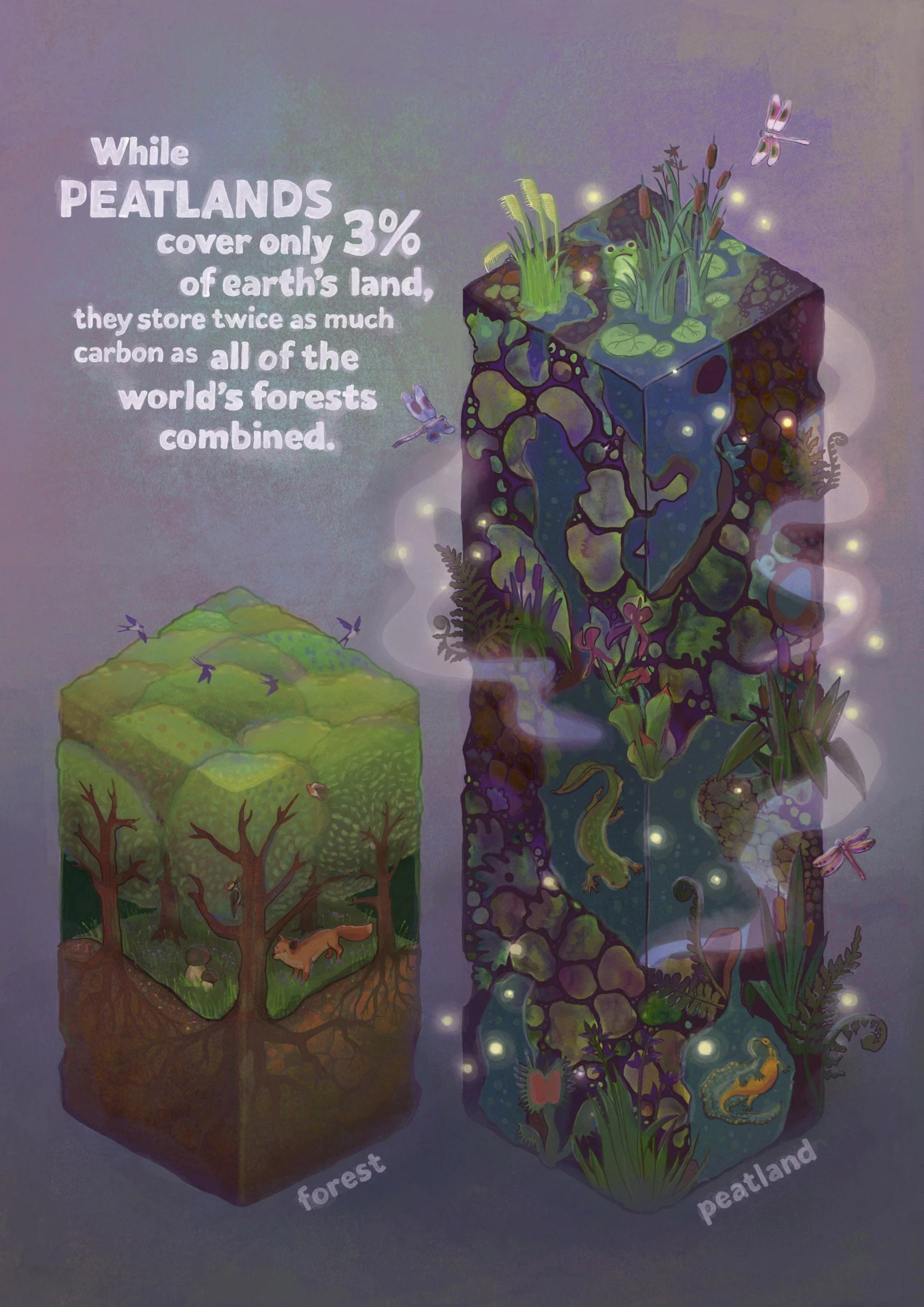
People often think about peatlands as wet places, but when they are dry they become places that attract fire. Zombie fires can smolder underground for weeks, months and in some cases years… waiting in the shadows for the right moment to emerge into the light and reignite the world above. The idea of zombie fires is totally ominous, but also strangely magical in the way that they escape our view and our control. This is why peatlands, when kept wet and healthy, are such important mitigators of fire and drought. With their absorbent properties, they can also help prevent flooding. Peatlands are vital, intelligent regulators of landscapes, they are ecosystems we urgently need to care for and protect.
Wetlands and peatlands are often overlooked in climate discussions. Why do you think they remain so underrepresented, despite their huge ecological importance?
Wetlands and peatlands are often overlooked in climate discussions because of how they have been framed culturally and politically. They are frequently portrayed as wastelands, as “scary” or “empty” places. As landscapes to be drained rather than valued, making their ecological richness easy to ignore. Their degradation is also a form of slow violence: like the frog in hot water metaphor, the impacts unfold gradually and go unnoticed until it’s too late. For example in the Netherlands, soil subsidence from drained peatlands happens slowly, yet over time the land sinks by meters. Restoring peatlands is also slow. It requires landscape-wide agreement and collaboration between many actors, which is far harder to organise than restoration efforts focused on a single plot of land, such as forests.
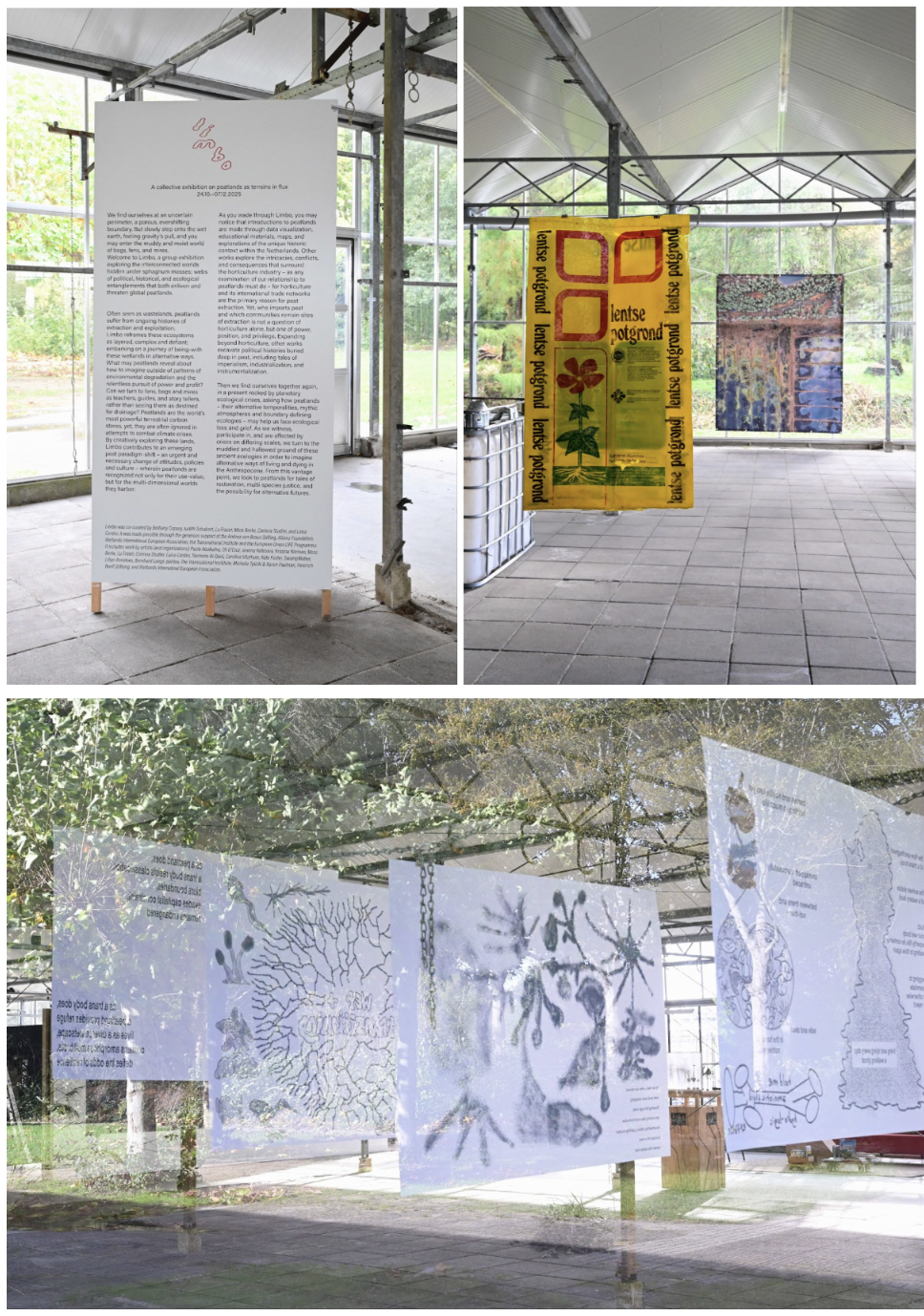
We delivered one of the largest peatland exhibitions to date, Limbo, created in collaboration with De Proef, a former horticultural school in the peat-rich province of Drenthe in the Netherlands. Inspired by the region’s long history of peat extraction, the exhibition brought together over 25 artists from around Europe, working across sound, data, video, and cartography to present peatlands as culturally complex landscapes rather than mere carbon stores. Alongside the exhibition, we hosted side-programming including lino-printing, artist talks, and a paludi dinner, pairing historical context with clear calls to action and significantly expanding the cultural and political visibility of peatland justice in the Netherlands.
The crowdfund supported the exhibition on a limited budget, ensuring fair artist compensation and enabling an interactive public programme, documentation, and a booklet that extends the work beyond the exhibition itself. Through over 200 pledges we reached just over €10,000! We are deeply grateful for the global network of supporters who made this possible.
Images from the Limbo exhibition taken by Caroline Vitzhum
2025 has been an incredible year for pioneering collaborations and creative breakthroughs at Ponda, and one of the highlights has undoubtedly been our partnership with Berghaus.
Together, we developed a concept piece that demonstrates how regenerative materials can be seamlessly integrated into outerwear, without compromising function or design.
The Concept Jacket is insulated with BioPuff® and BioPuff® Wadding, offering a versatile approach to warmth. Designed with removable components, the garment allows the wearer to adapt insulation levels according to activity or climate. Its modular system provides the option of loose fill or wadding, enabling both visual and functional flexibility.
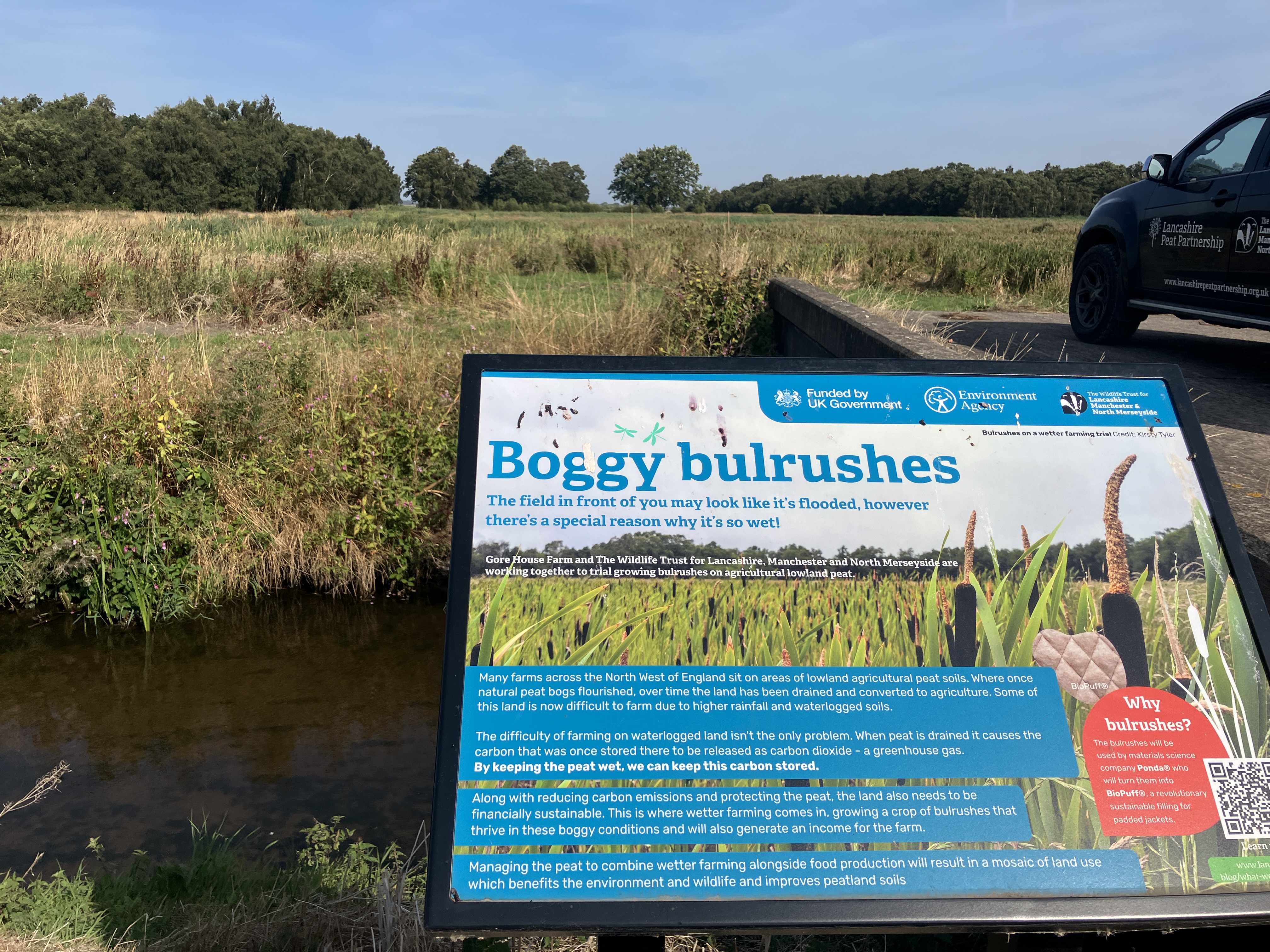
Every element of the jacket’s BioPuff® insulation was sourced and processed entirely in Europe, showcasing how regenerative biomaterials can be scaled responsibly. The result: outerwear that’s functional, adaptable, and considered.
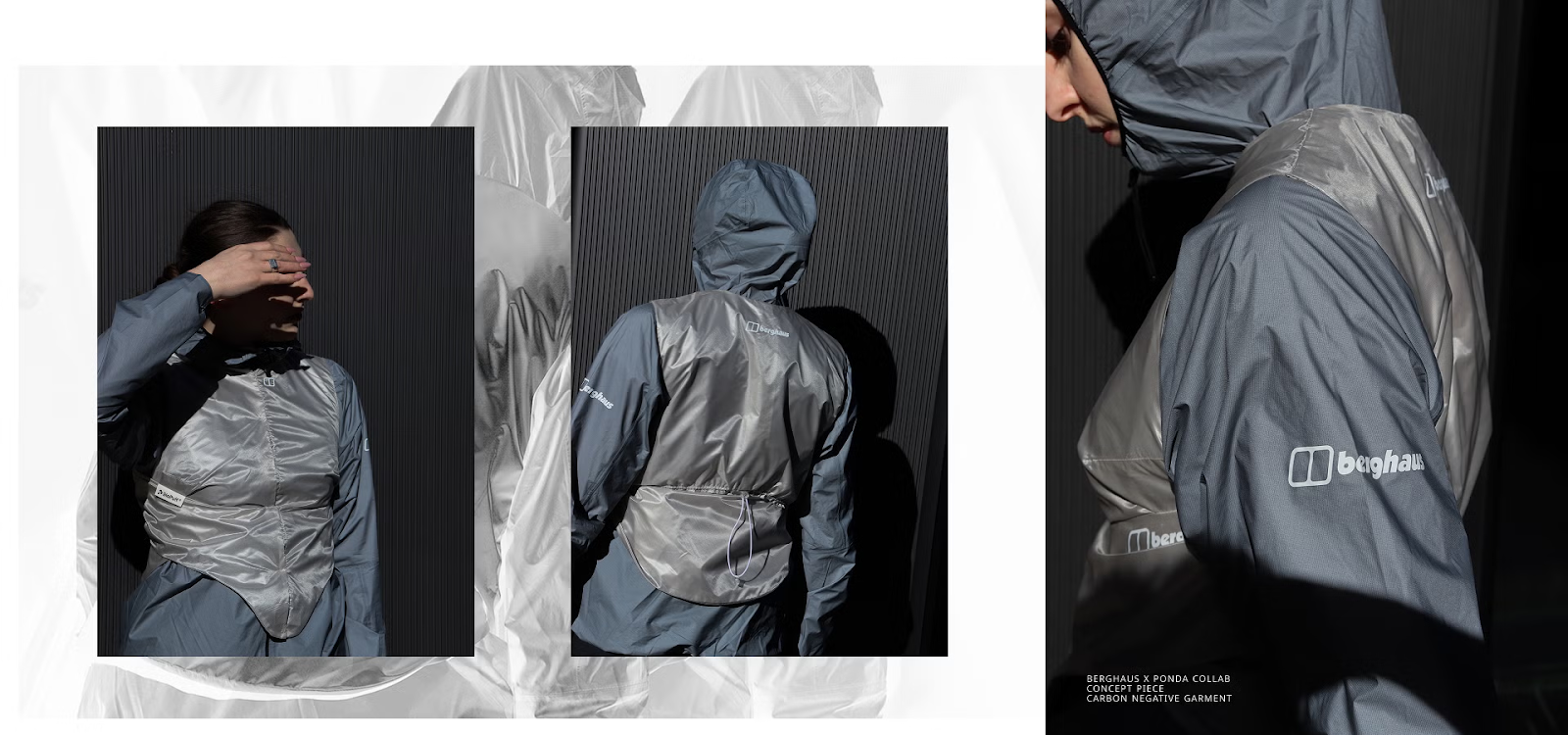
Created with a female-first approach, the jacket is precisely tailored to the female form to ensure optimal comfort and movement. Designed by a fully female team, for a female customer may seem like a given, but it is less frequent than you think. A single shoulder seam allows overlapping panels to move freely with the body, a subtle but essential design feature that enhances both performance and wearability.
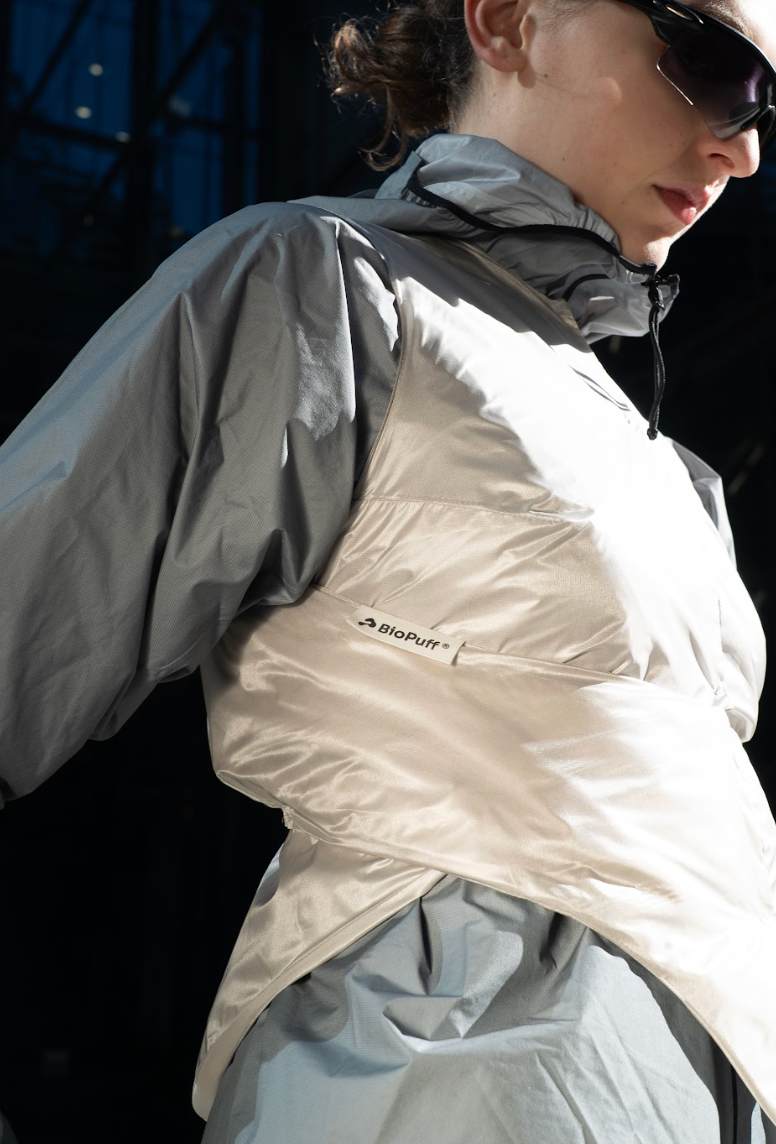
Built for changeable conditions, the jacket transforms effortlessly:
- As a windproof outer layer for lightweight protection.
- With a mid-weight wadded insert for moderate insulation.
- Or with a high-insulation loose-fill insert for maximum warmth.
“Designing the Berghaus x Ponda concept was such a gorgeous process—an exploration of how to amplify the efficiency of an evolving fibre while building on the performance legacy and human-first outdoor innovation that defines Berghaus.”
- Alana O’Fylnn, Innovation Designer at Pentland
Measuring Our Impact
BioPuff® offers a measurable reduction in environmental impact, as demonstrated by its Life Cycle Assessment (LCA):
- 3.4 kg CO₂ eq per kg of BioPuff® — 88% lower than goose down and 19% lower than polyester fibre.
- 0.4 m³ water use per kg, thanks to naturally occurring wetland crops that require no irrigation.
- Full traceability from wetland to textile.
“Working with Alana, Rosemary, and the wider team has been incredibly rewarding. Their patience, dedication, and collaborative spirit throughout the Biopuff onboarding process has been truly refreshing. By combining our strengths, we’re ensuring that every new product reflects Berghaus’s unique identity and Biopuff’s high-performance innovation — resulting in products customers will truly love.”
- Ella McMillan, Product Innovation Lead at Ponda
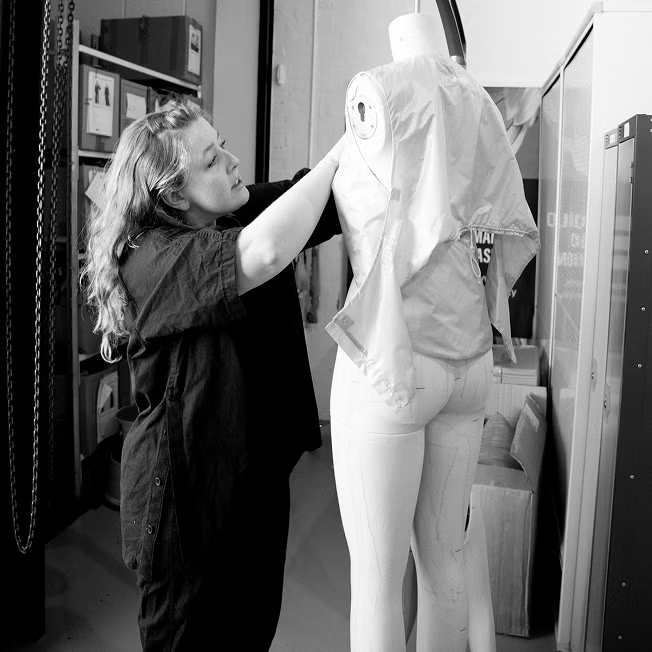
The Concept Jacket was proudly crafted at Fashion-Enter Ltd (FEL) in London - an award-winning social enterprise and ethical garment manufacturer with a leading status in the Fast Forward audit.
FEL opened its Fashion Technology Academy in 2015, with support from the Greater London Authority and Haringey Council. It was the first Government-backed academy in the UK dedicated to improving technical garment manufacturing.
Our collaboration with Berghaus is more than a concept - it’s a vision of what happens when next-generation materials meet heritage craftsmanship. Innovation and regeneration, working side by side, to create apparel that performs for people and the planet.
Follow our journey @ponda.bio
.png)