In Conversation With: Our Head of Agriculture
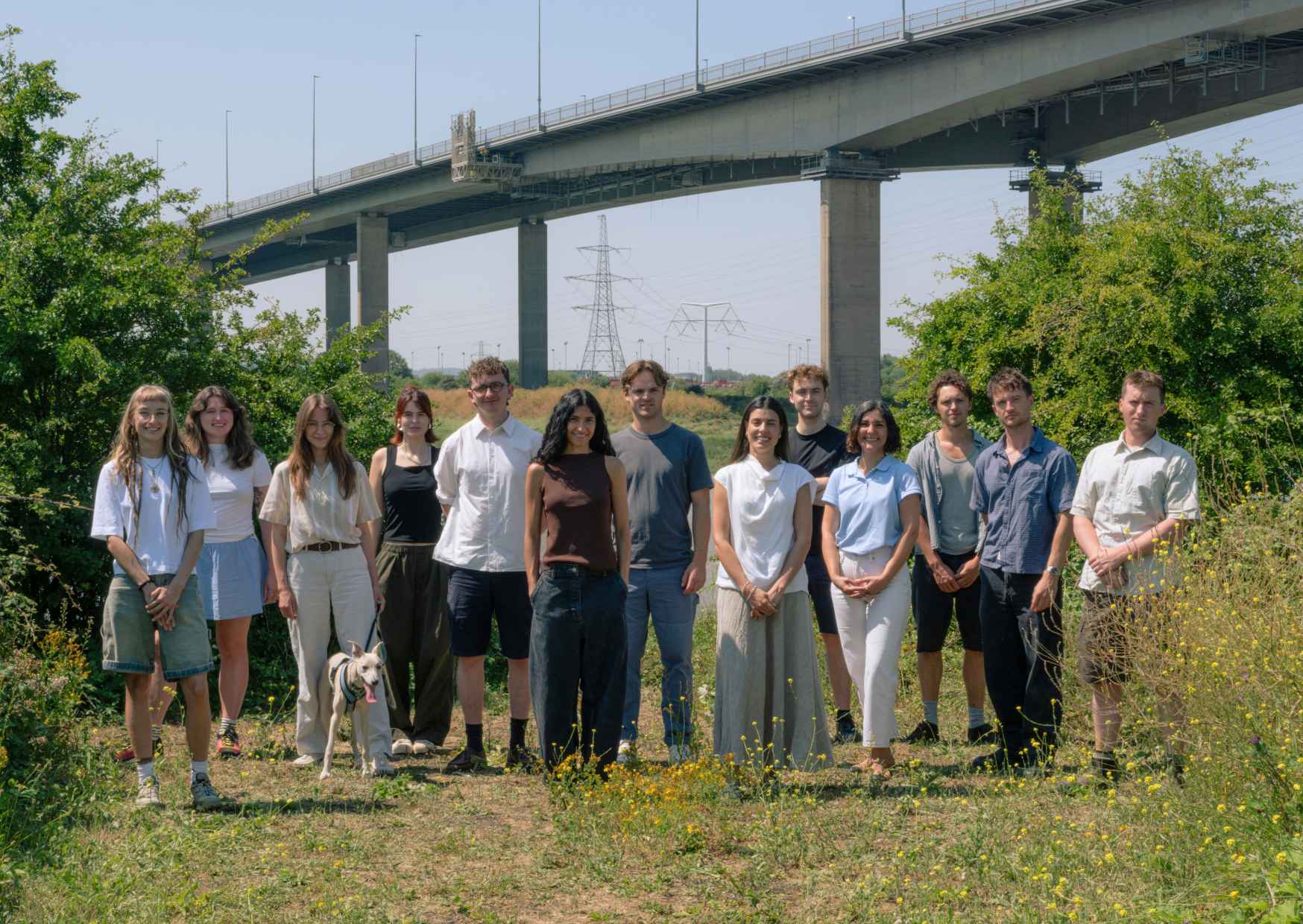
At Ponda, we have long admired the energy, creativity and determination behind RE-PEAT’s work. Their commitment to championing peatlands and the communities who depend on them - feels both urgent and deeply inspiring. RE-PEAT is a youth-led collective working across Europe, using creative advocacy to give peatlands the attention they deserve. Bringing together voices from art, science and activism, its members are united by a shared love for these vital ecosystems and a fierce commitment to protecting them.
Youth-led activism is essential in responding to the climate crisis, and it is always energising to connect with others who care about wetlands as deeply as we do. Over the coming months, we’ll be collaborating with RE-PEAT on a number of projects, but first, we wanted to introduce their brilliant team to the Ponda community. We’re delighted to sit down with them to explore how RE-PEAT began, the role of art in activism, and why peatlands deserve a much louder voice in the climate conversation.
To begin, could you share the story of how RE-PEAT first came to life? Where did the idea spark from, and how did it grow into what it is today? What are your best achievements in this time period?
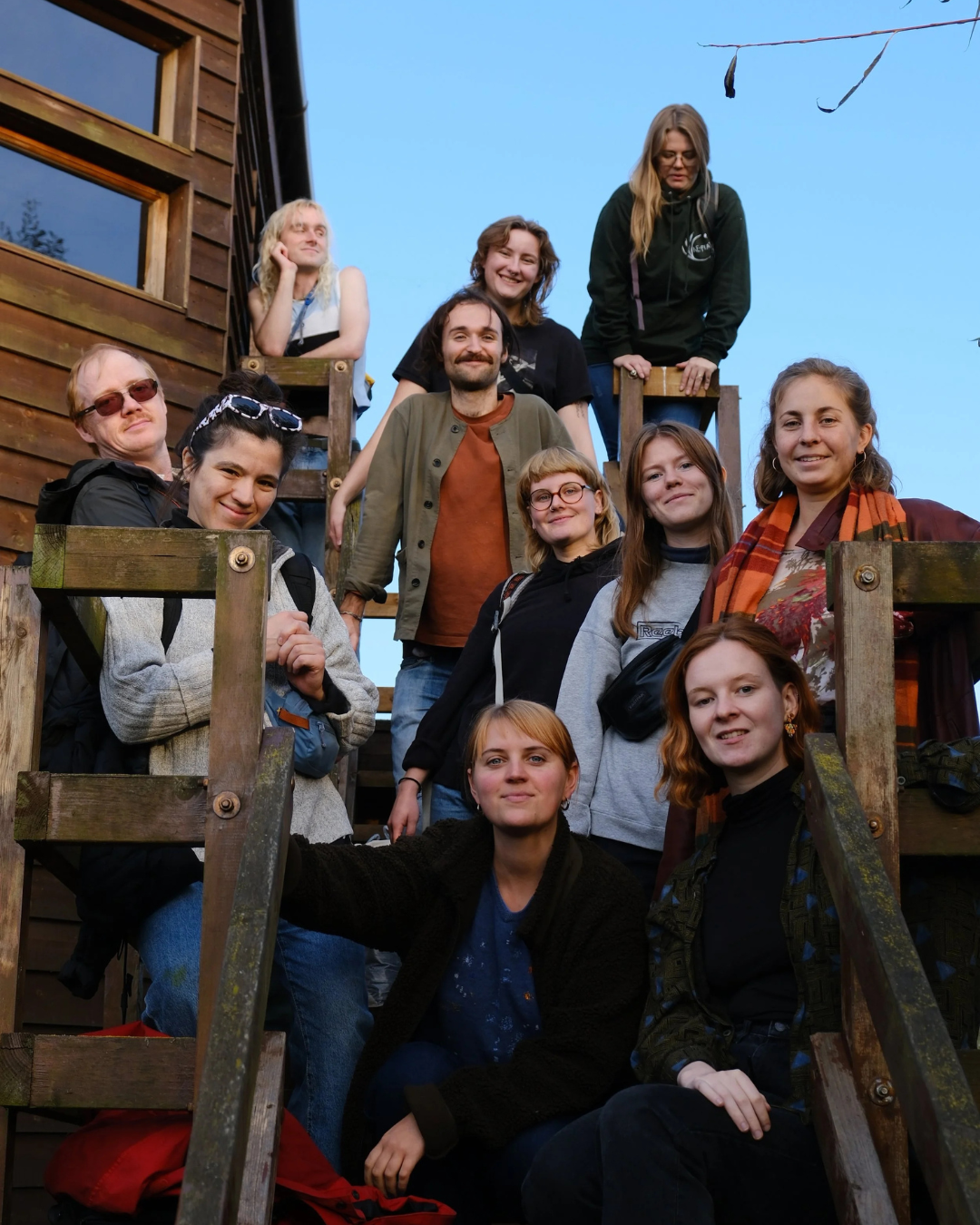
Looking back now, it’s clear that September 2019 is a sort of BP and AP situation for a few of us: before peatlands and after peatlands. It was at this time that Bethany and Frankie were in Germany for a climate camp, which was set up to protest against a big chemical fertilizer company. They ended up spontaneously joining a peatland excursion and finding out about how vital peatlands are for the climate. On the bus ride home totally transfixed in this new mission, the name “re-peat” jokingly emerged. Since then, more and more people “re-peated” this moment of BP/AP, and so we formed a collective with many time-travelling multi-perspective starting points.
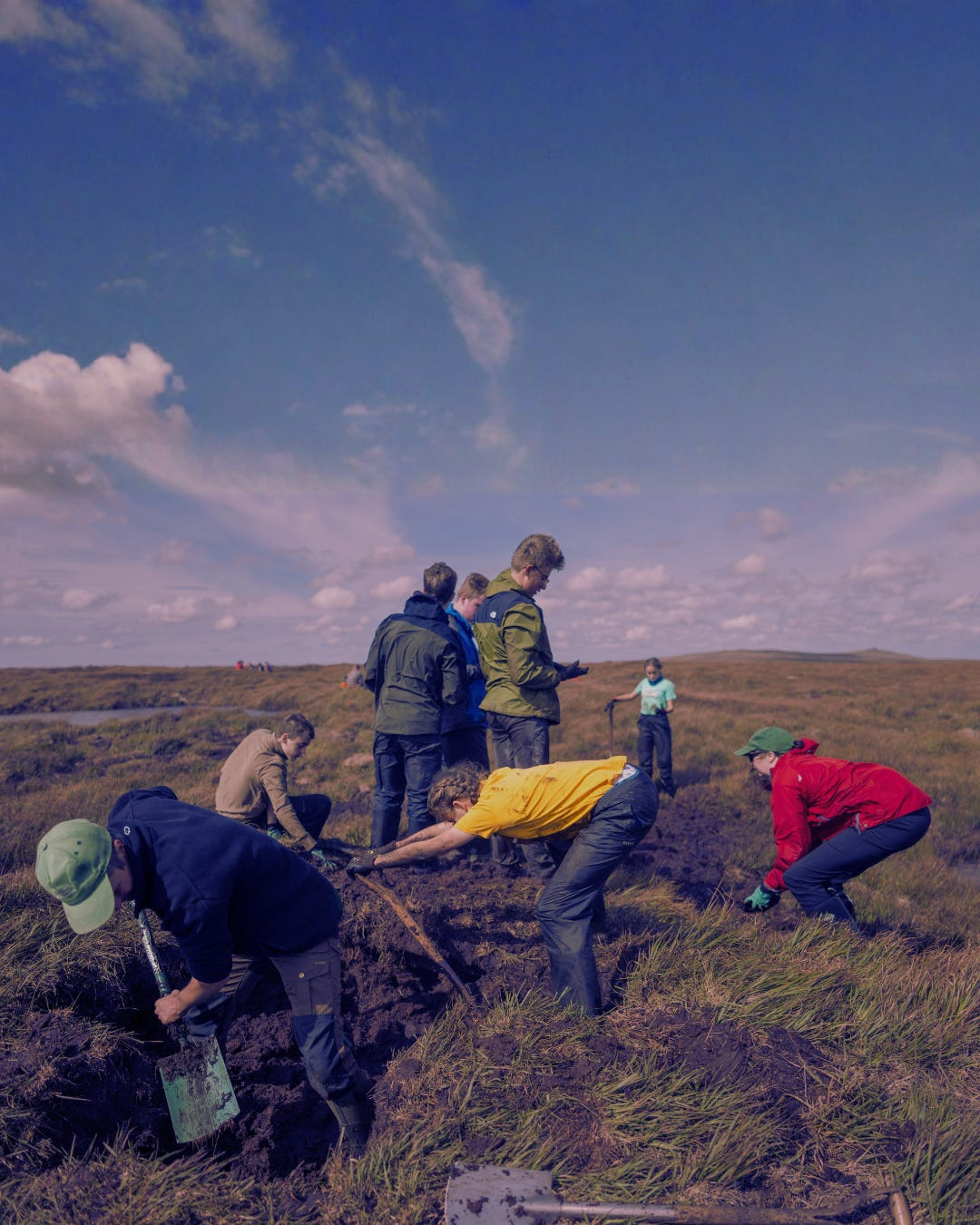
Over the course of the last five years together, we’ve learnt a lot more about peatlands. We have travelled across land and sea to visit them, listened to memories and built our own relationships with these landscapes. We’ve seen the importance of finding playful, metaphorical, collaborative, and imaginative ways of relating with peatlands and sharing their peculiar values. In return, the peatlands have guided us through explorations of grief, deep time, intergenerational thinking, migration, extraction, culture and more.
.png)
Since starting RE-PEAT, what is one of your favourite or most surprising things you’ve learned about peatlands?
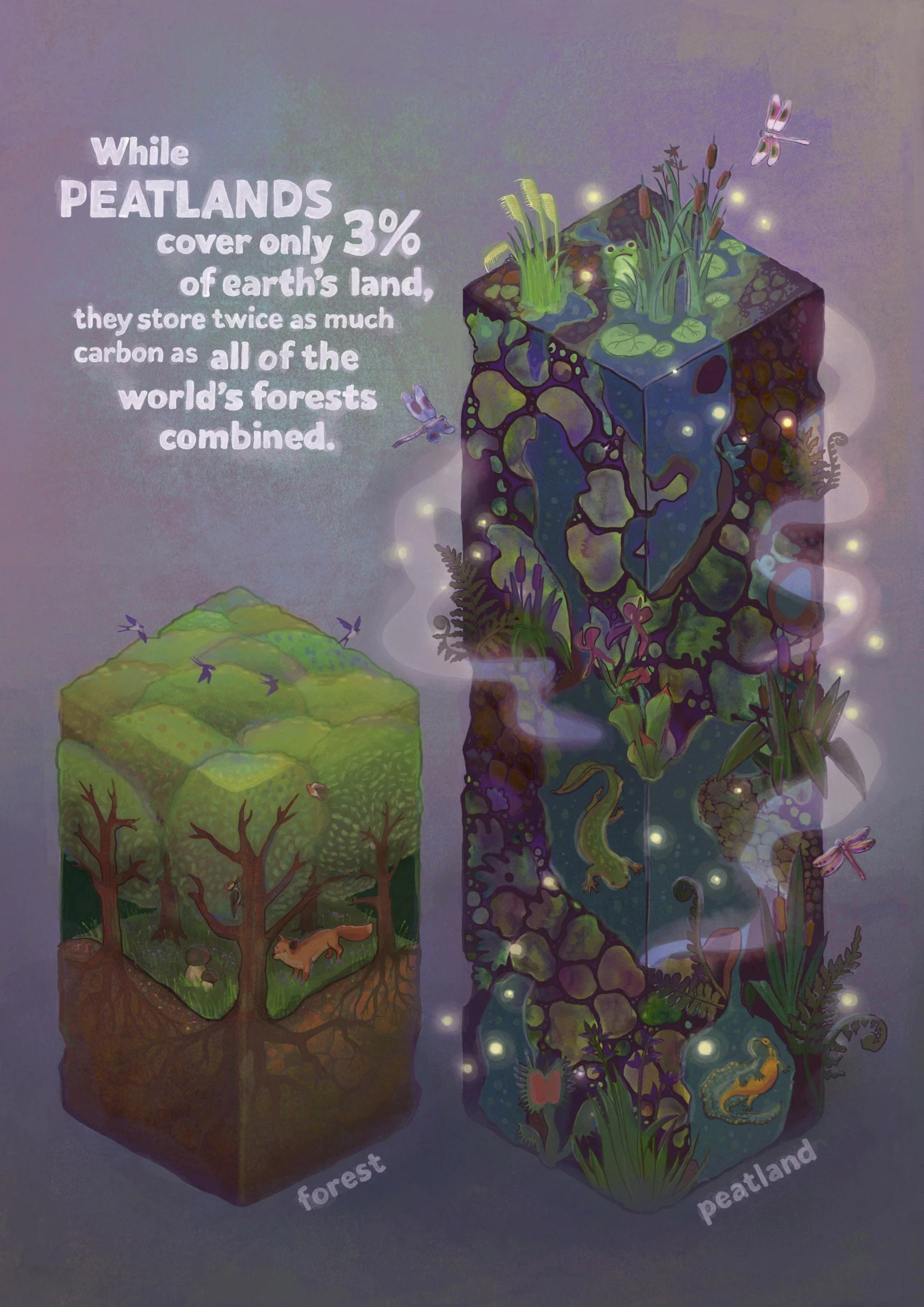
People often think about peatlands as wet places, but when they are dry they become places that attract fire. Zombie fires can smolder underground for weeks, months and in some cases years… waiting in the shadows for the right moment to emerge into the light and reignite the world above. The idea of zombie fires is totally ominous, but also strangely magical in the way that they escape our view and our control. This is why peatlands, when kept wet and healthy, are such important mitigators of fire and drought. With their absorbent properties, they can also help prevent flooding. Peatlands are vital, intelligent regulators of landscapes, they are ecosystems we urgently need to care for and protect.
Wetlands and peatlands are often overlooked in climate discussions. Why do you think they remain so underrepresented, despite their huge ecological importance?
Wetlands and peatlands are often overlooked in climate discussions because of how they have been framed culturally and politically. They are frequently portrayed as wastelands, as “scary” or “empty” places. As landscapes to be drained rather than valued, making their ecological richness easy to ignore. Their degradation is also a form of slow violence: like the frog in hot water metaphor, the impacts unfold gradually and go unnoticed until it’s too late. For example in the Netherlands, soil subsidence from drained peatlands happens slowly, yet over time the land sinks by meters. Restoring peatlands is also slow. It requires landscape-wide agreement and collaboration between many actors, which is far harder to organise than restoration efforts focused on a single plot of land, such as forests.
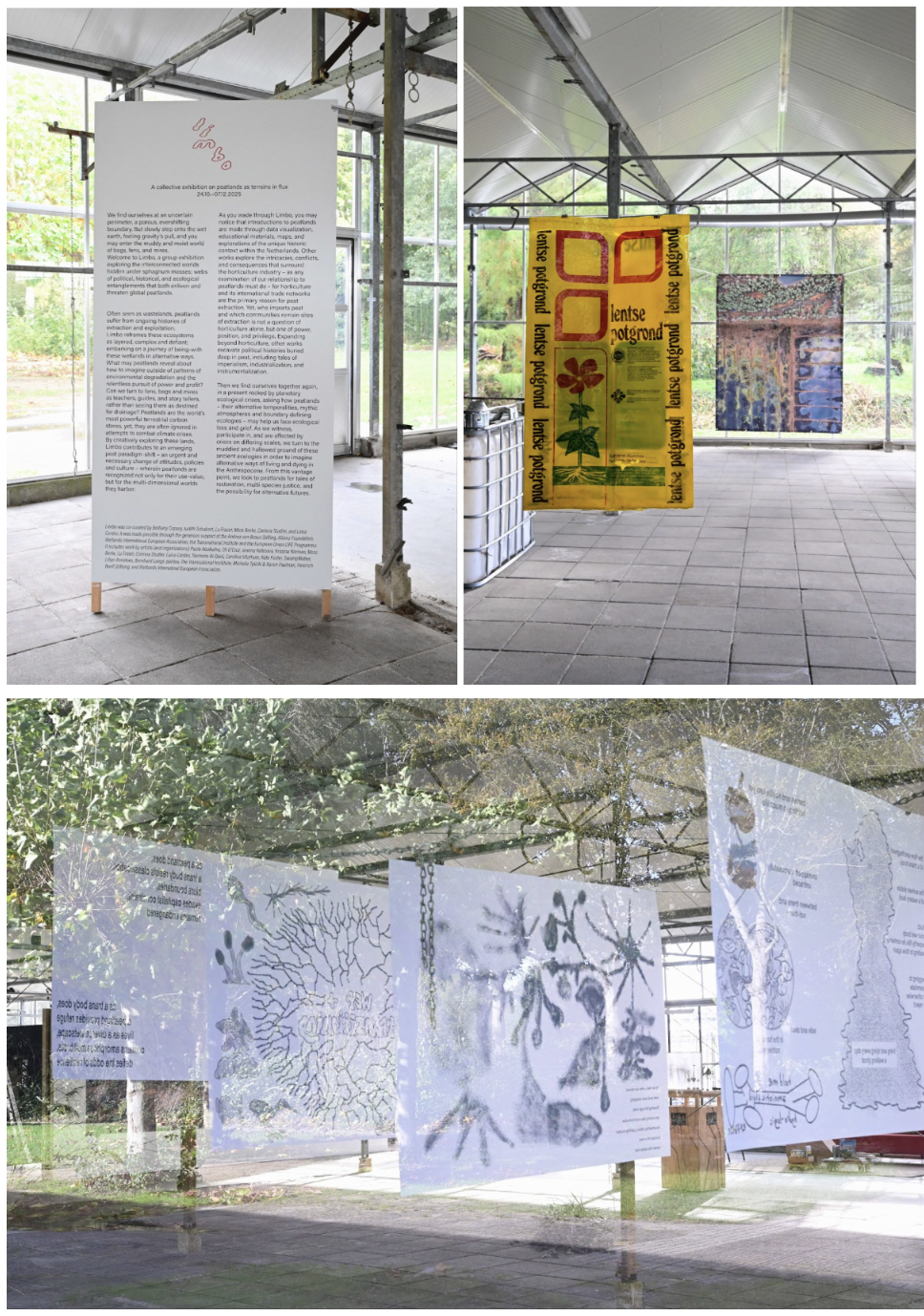
We delivered one of the largest peatland exhibitions to date, Limbo, created in collaboration with De Proef, a former horticultural school in the peat-rich province of Drenthe in the Netherlands. Inspired by the region’s long history of peat extraction, the exhibition brought together over 25 artists from around Europe, working across sound, data, video, and cartography to present peatlands as culturally complex landscapes rather than mere carbon stores. Alongside the exhibition, we hosted side-programming including lino-printing, artist talks, and a paludi dinner, pairing historical context with clear calls to action and significantly expanding the cultural and political visibility of peatland justice in the Netherlands.
The crowdfund supported the exhibition on a limited budget, ensuring fair artist compensation and enabling an interactive public programme, documentation, and a booklet that extends the work beyond the exhibition itself. Through over 200 pledges we reached just over €10,000! We are deeply grateful for the global network of supporters who made this possible.
Images from the Limbo exhibition taken by Caroline Vitzhum
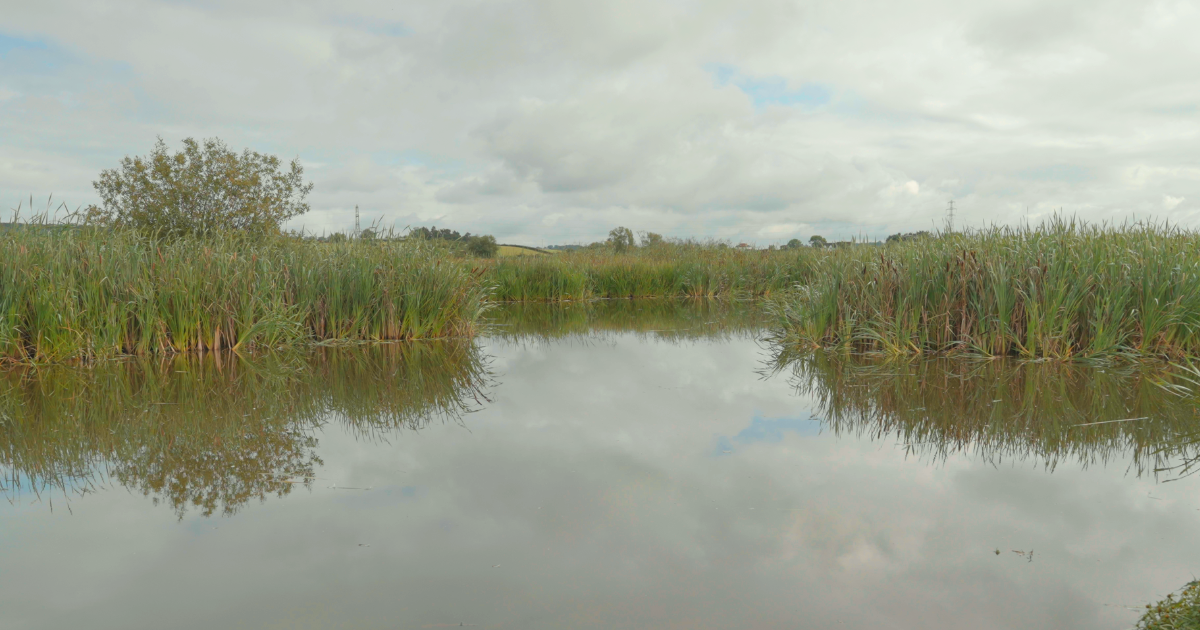
At Ponda, we’re on a mission to regenerate carbon-emitting wetlands and create a more sustainable future for people and the planet. By cultivating Typha latifolia, a resilient wetland plant, we’re helping to build a new supply chain that supports biodiversity, captures carbon, and sustains farmers’ livelihoods.
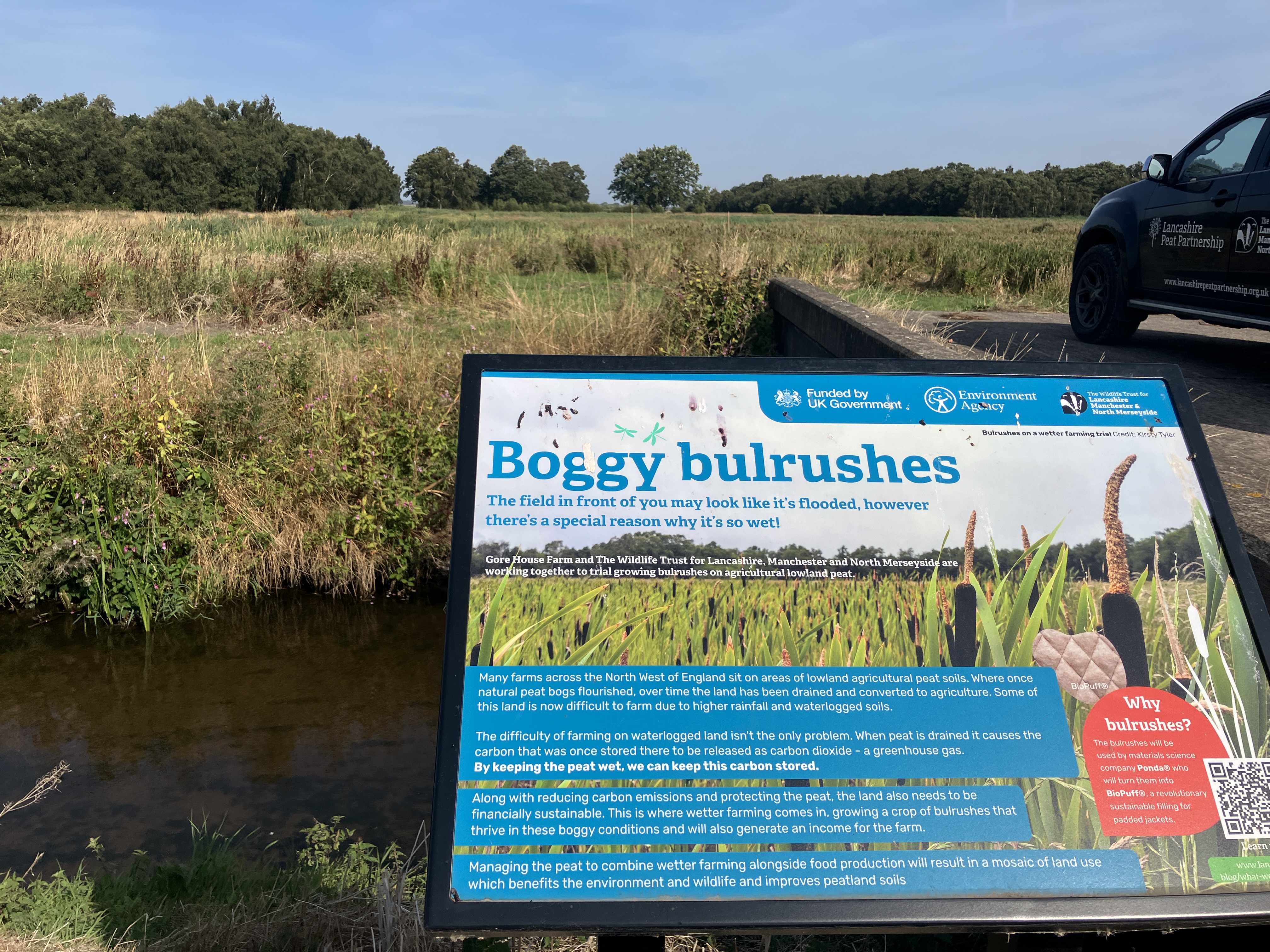
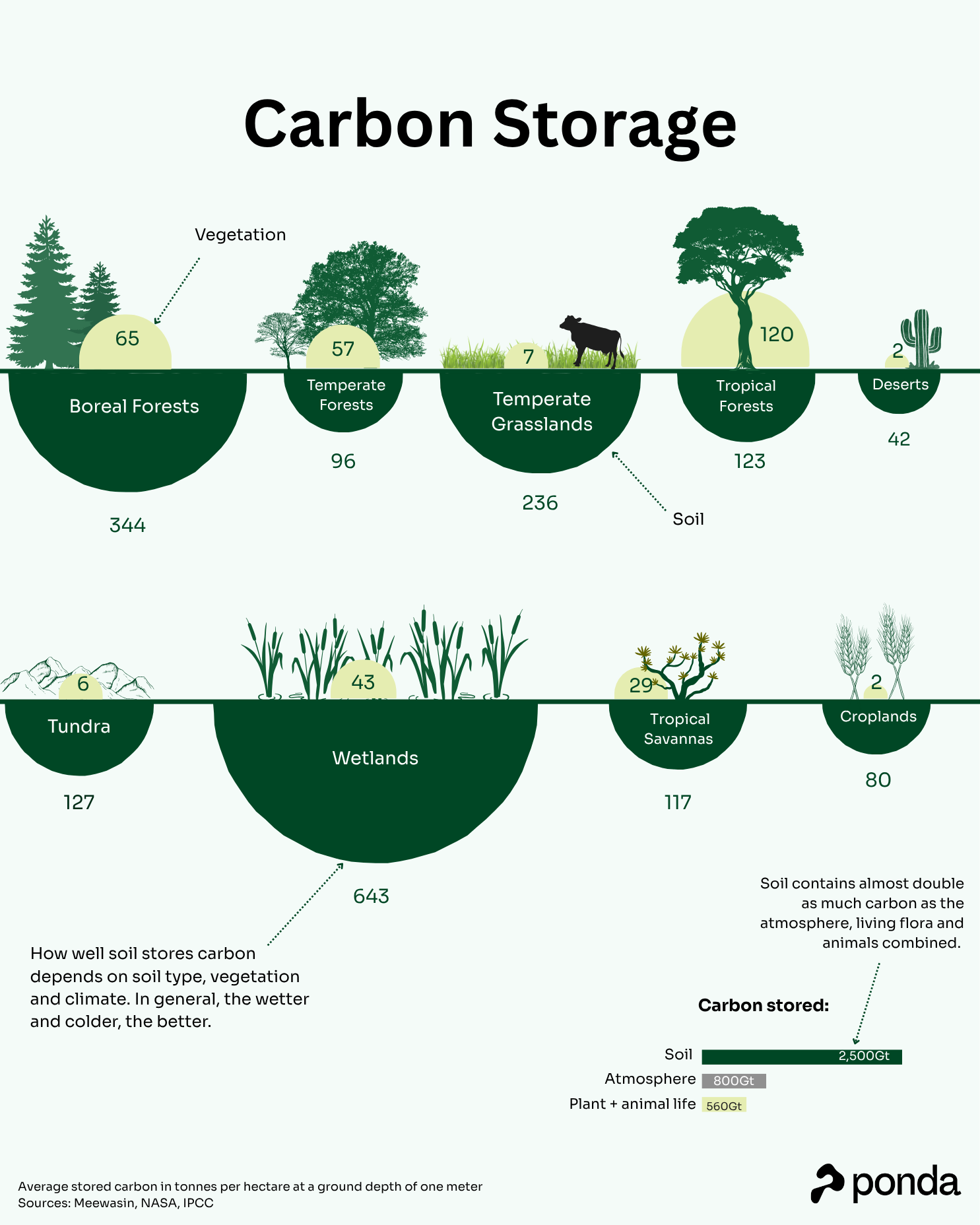
Typha is a hardy, low-maintenance crop grown through paludiculture, a method of farming on rewetted peatlands, bogs and fens. These unique landscapes are among the most powerful natural carbon stores on Earth, holding over 40% of all soil carbon, which is twice as much as the world’s forests combined. However, traditional land drainage has resulted in these precious carbon stores becoming carbon emitters. Typha grows quickly, helps restore ecosystems, and produces a high-quality fibre used in sustainable textiles such as BioPuff.
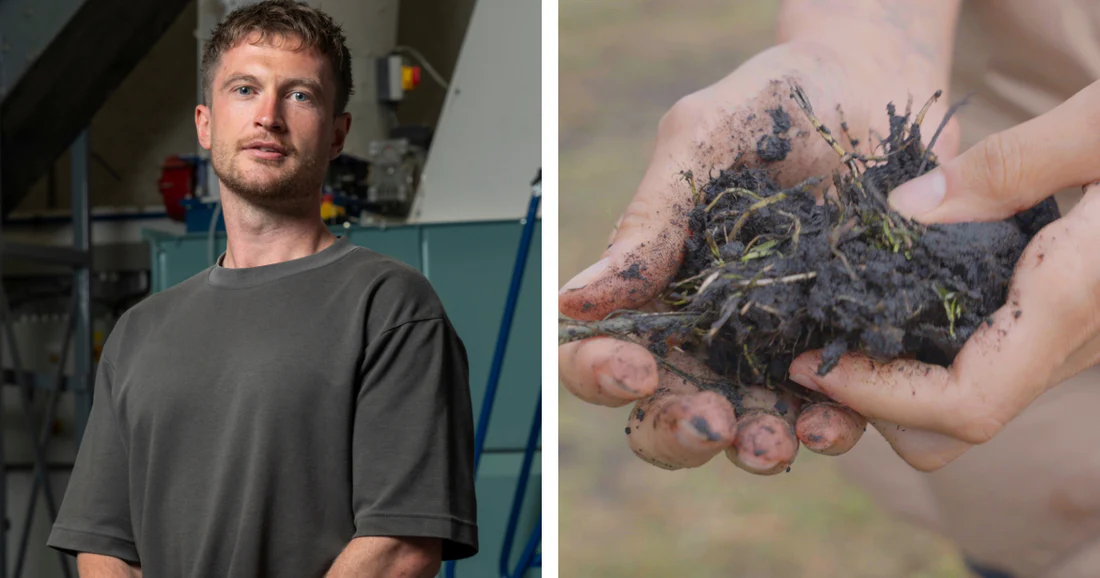
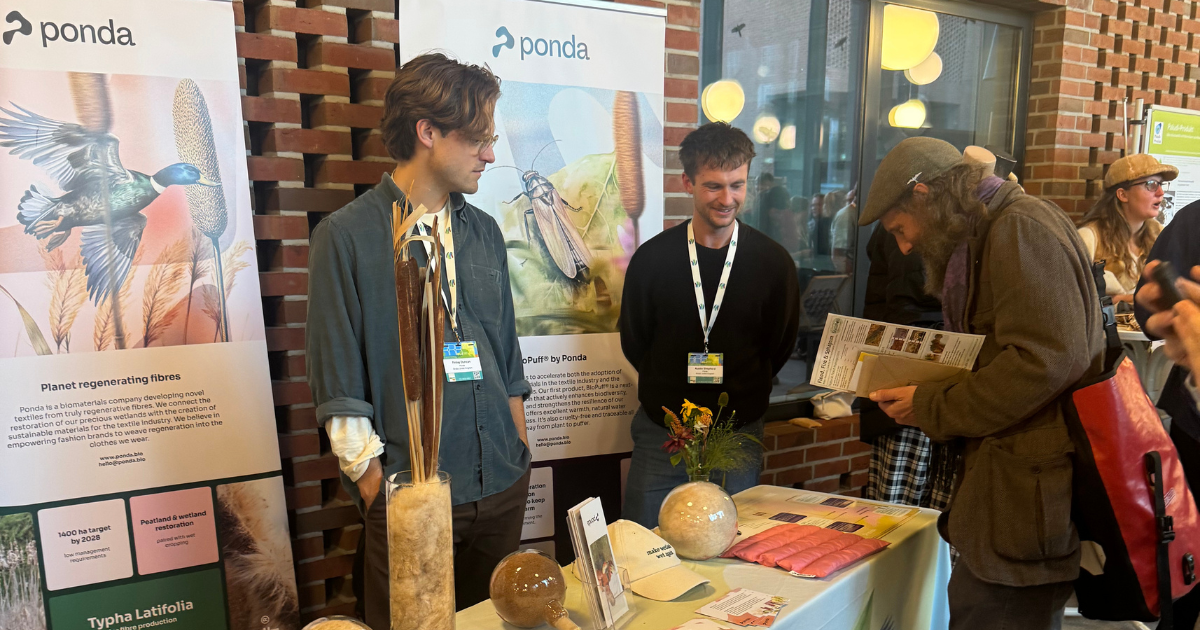
Behind this work is a dedicated team of growers, scientists and innovators, including Austin, Ponda’s Head of Agriculture. With experience across farming, forestry and sustainable supply chains, Austin leads the development of Ponda’s agricultural systems. He works closely with farmers and landowners to cultivate, harvest and scale Typha production, ensuring each project contributes to environmental restoration and long-term impact.
Could you share a bit about your background and what first drew you to agriculture and environmental restoration?
Growing up in rural Wiltshire, I was surrounded by agriculture and nature. My childhood was spent exploring the countryside, and my first jobs were on farms and rural estates. Later, I moved into logistics and supply chain management while studying for an MSc in Sustainable Agriculture and Food Security. This path eventually led me to work in sustainable forestry certification with the Soil Association before joining Ponda.
What does a typical day look like in your role as Head of Agriculture at Ponda?
There’s really no such thing as a typical day. One day I might be organising international shipping documentation for a delivery of Typha from the EU, and the next I could be working with farmers and landowners on-site design, crop establishment or harvest planning. I also collaborate closely with our product and manufacturing teams to enhance fibre quality and performance through agronomic improvements. At Ponda, our teams are highly collaborative, so my work constantly shifts between supply chain, field and product development challenges.
What excites you most about the work Ponda is doing right now?
What excites me most is how Ponda’s work creates benefits across the board. We’re giving farmers and landowners a profitable, regenerative alternative to traditional crops, while also providing brands and consumers with sustainable options that reduce the impact of resource-intensive textiles. It’s inspiring to be driving change in such a new and innovative area of material development, especially within an industry I never imagined I’d be part of back when I was working on farms as a teenager.
Has nature ever taught you something that’s changed the way you approach your work?
Nature is always changing and adapting to its surroundings. Nothing stays the same for long, and that constant evolution has shaped how I approach my work. It’s taught me to stay flexible, responsive and ready to make the most of opportunities as they arise, because you never know when they might disappear.
What are some of the key environmental benefits of wetland restoration, especially when it comes to reducing carbon emissions?
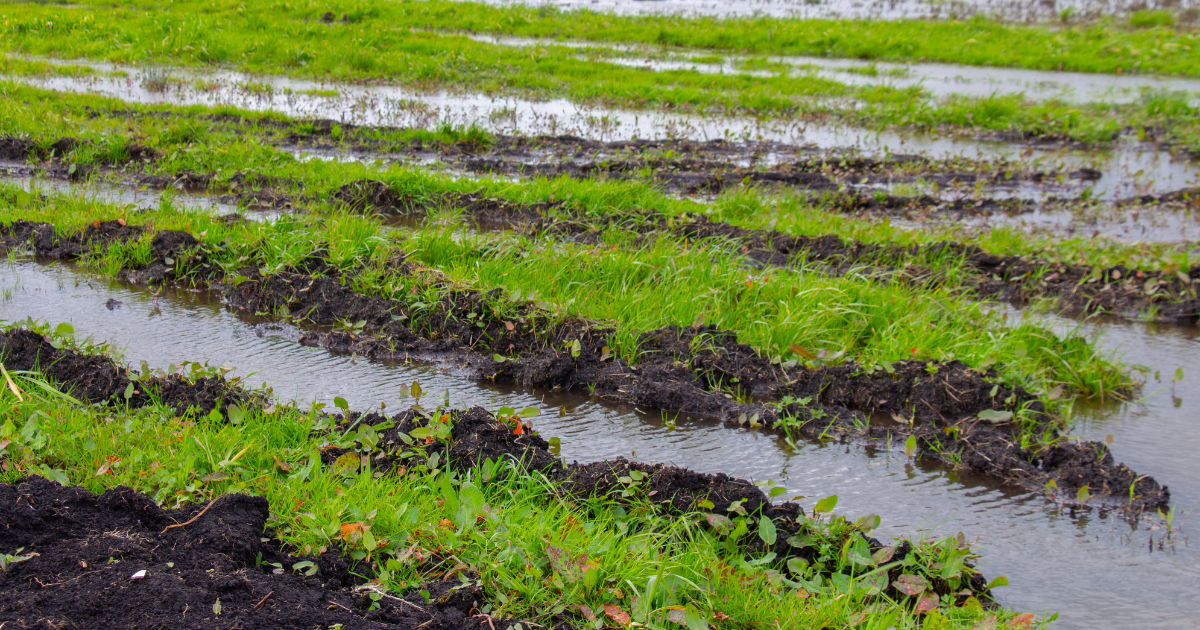
Restoring wetlands captures and stores carbon while preventing its release. It also supports nutrient management and improves water quality. Healthy wetland systems filter nutrients such as phosphorus and nitrogen, reducing downstream pollution and helping to meet nutrient neutrality goals. Fast-growing plants like Typha store carbon in both their biomass and soil and can ultimately be harvested for sustainable materials like BioPuff.
How does Ponda support farmers as they transition from traditional agriculture to wetland cultivation?
We collaborate closely with our farmers from site design and planting through to establishment, harvest and logistics. It’s a truly collaborative process. We’re also integrating new technologies such as drone sowing and mechanical harvesting. The continuous feedback loop between us and our farmers is essential to shared success.
In your view, how could wetland farming shape the future of regenerative agriculture and sustainable material innovation?
Wetland farming will play a key role in the future of regenerative agriculture because it strikes a balance between commercial viability, emissions reduction, biodiversity and water quality, while also leading to innovative and sustainable materials.
If you could share one message with farmers or landowners thinking about restoring wetlands, what would it be?
If you’re looking to turn your land into something that delivers long-term benefits for the planet and wildlife while supporting a cleaner fashion supply chain, get in touch. We’d love to chat and explore how wetlands could work for you.
For any questions about wetland restoration or Typha cultivation, you can reach Austin at:
Email: austin@ponda.bio
LinkedIn: https://www.linkedin.com/in/austin-shepherd-119b21372/
.png)