In Conversation With: Genaro Rivas
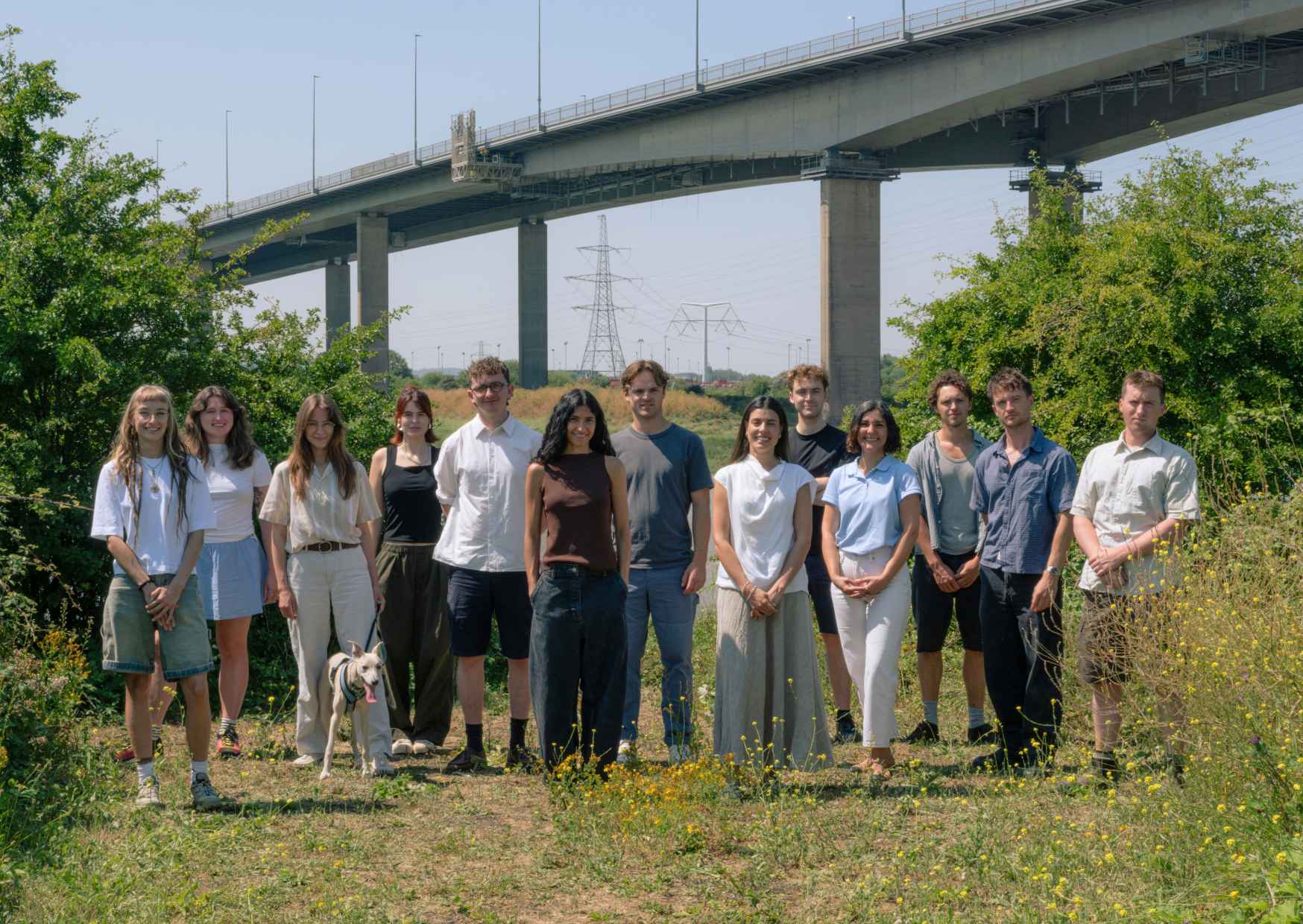
At Ponda, we have long admired the energy, creativity and determination behind RE-PEAT’s work. Their commitment to championing peatlands and the communities who depend on them - feels both urgent and deeply inspiring. RE-PEAT is a youth-led collective working across Europe, using creative advocacy to give peatlands the attention they deserve. Bringing together voices from art, science and activism, its members are united by a shared love for these vital ecosystems and a fierce commitment to protecting them.
Youth-led activism is essential in responding to the climate crisis, and it is always energising to connect with others who care about wetlands as deeply as we do. Over the coming months, we’ll be collaborating with RE-PEAT on a number of projects, but first, we wanted to introduce their brilliant team to the Ponda community. We’re delighted to sit down with them to explore how RE-PEAT began, the role of art in activism, and why peatlands deserve a much louder voice in the climate conversation.
To begin, could you share the story of how RE-PEAT first came to life? Where did the idea spark from, and how did it grow into what it is today? What are your best achievements in this time period?
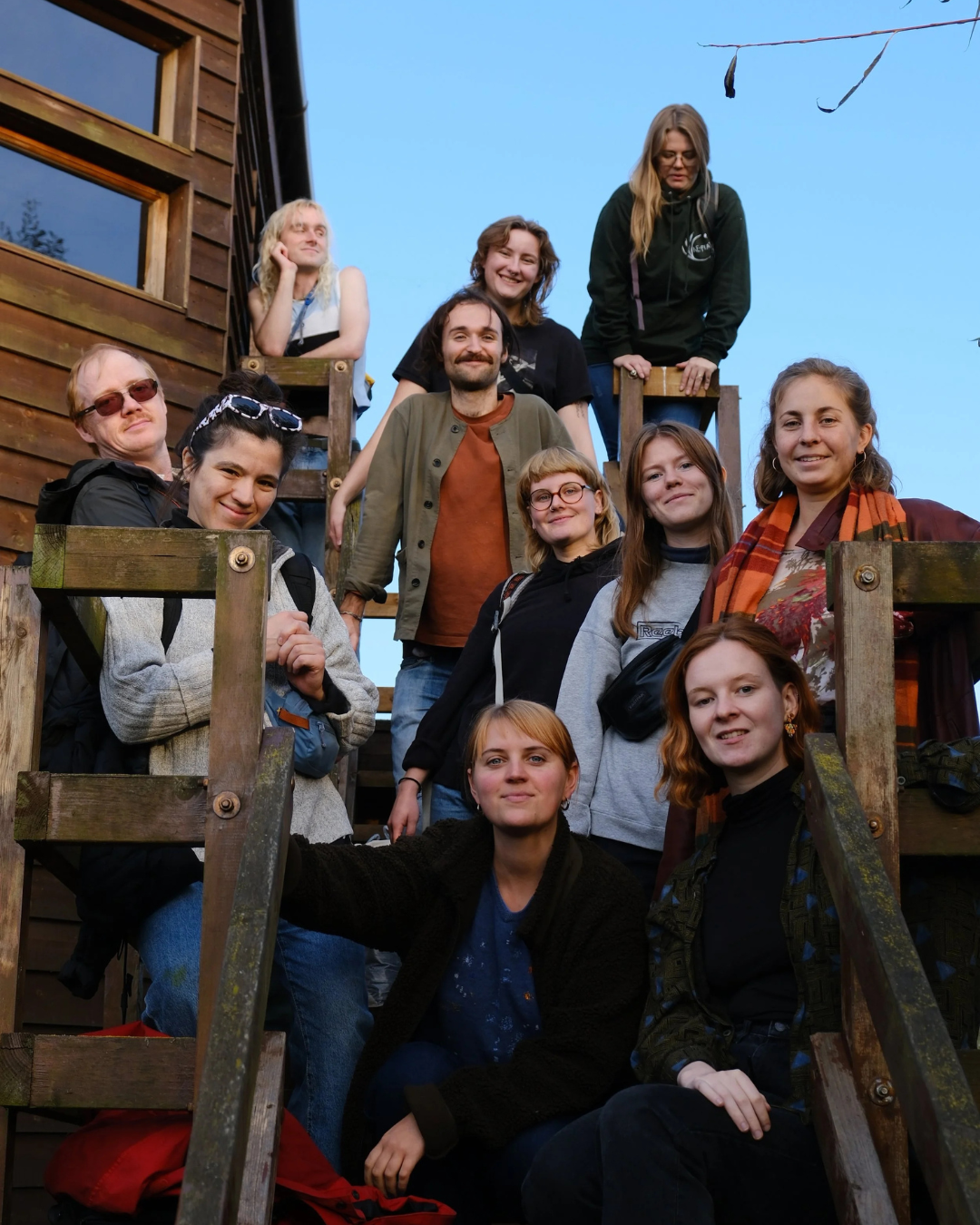
Looking back now, it’s clear that September 2019 is a sort of BP and AP situation for a few of us: before peatlands and after peatlands. It was at this time that Bethany and Frankie were in Germany for a climate camp, which was set up to protest against a big chemical fertilizer company. They ended up spontaneously joining a peatland excursion and finding out about how vital peatlands are for the climate. On the bus ride home totally transfixed in this new mission, the name “re-peat” jokingly emerged. Since then, more and more people “re-peated” this moment of BP/AP, and so we formed a collective with many time-travelling multi-perspective starting points.
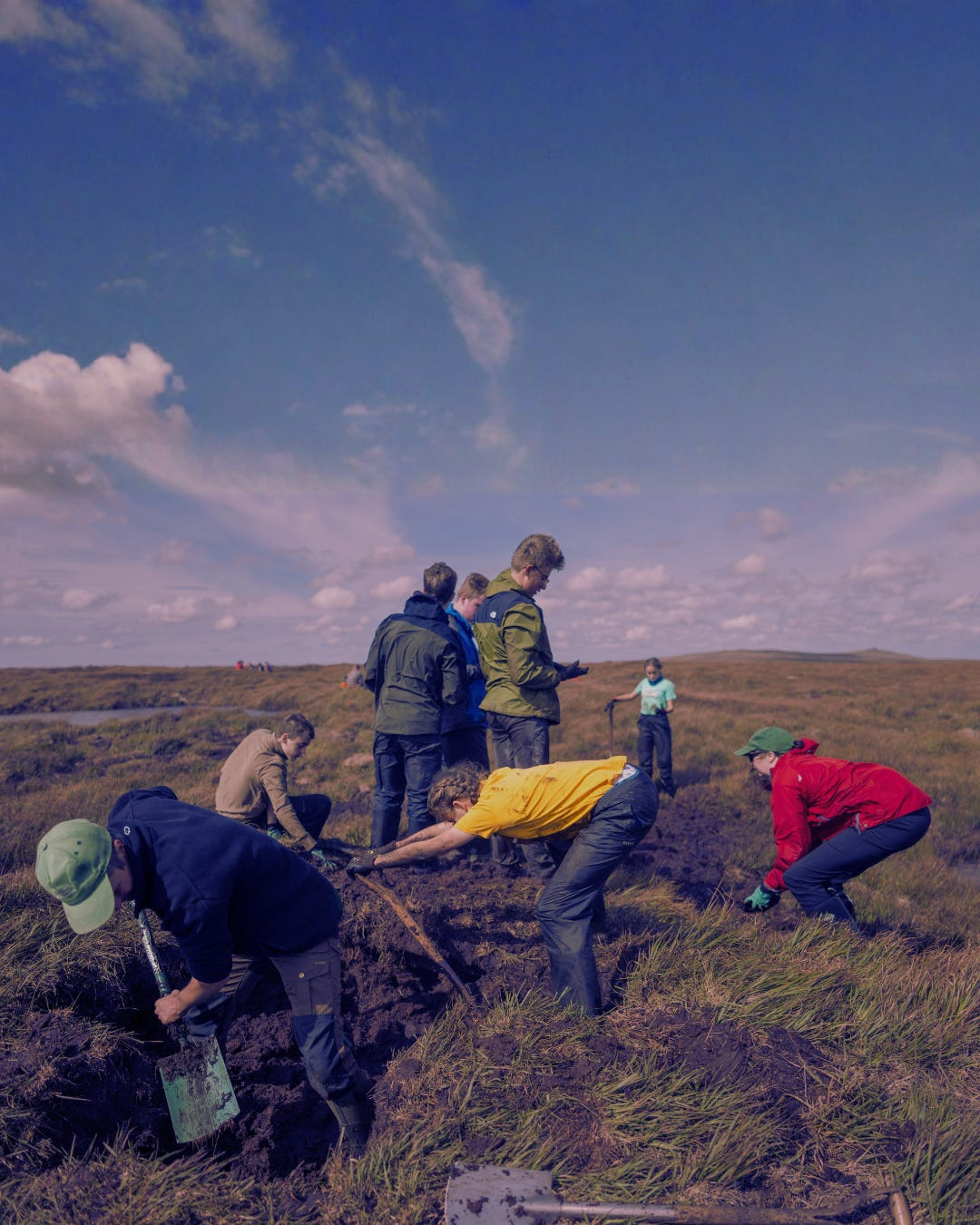
Over the course of the last five years together, we’ve learnt a lot more about peatlands. We have travelled across land and sea to visit them, listened to memories and built our own relationships with these landscapes. We’ve seen the importance of finding playful, metaphorical, collaborative, and imaginative ways of relating with peatlands and sharing their peculiar values. In return, the peatlands have guided us through explorations of grief, deep time, intergenerational thinking, migration, extraction, culture and more.
.png)
Since starting RE-PEAT, what is one of your favourite or most surprising things you’ve learned about peatlands?
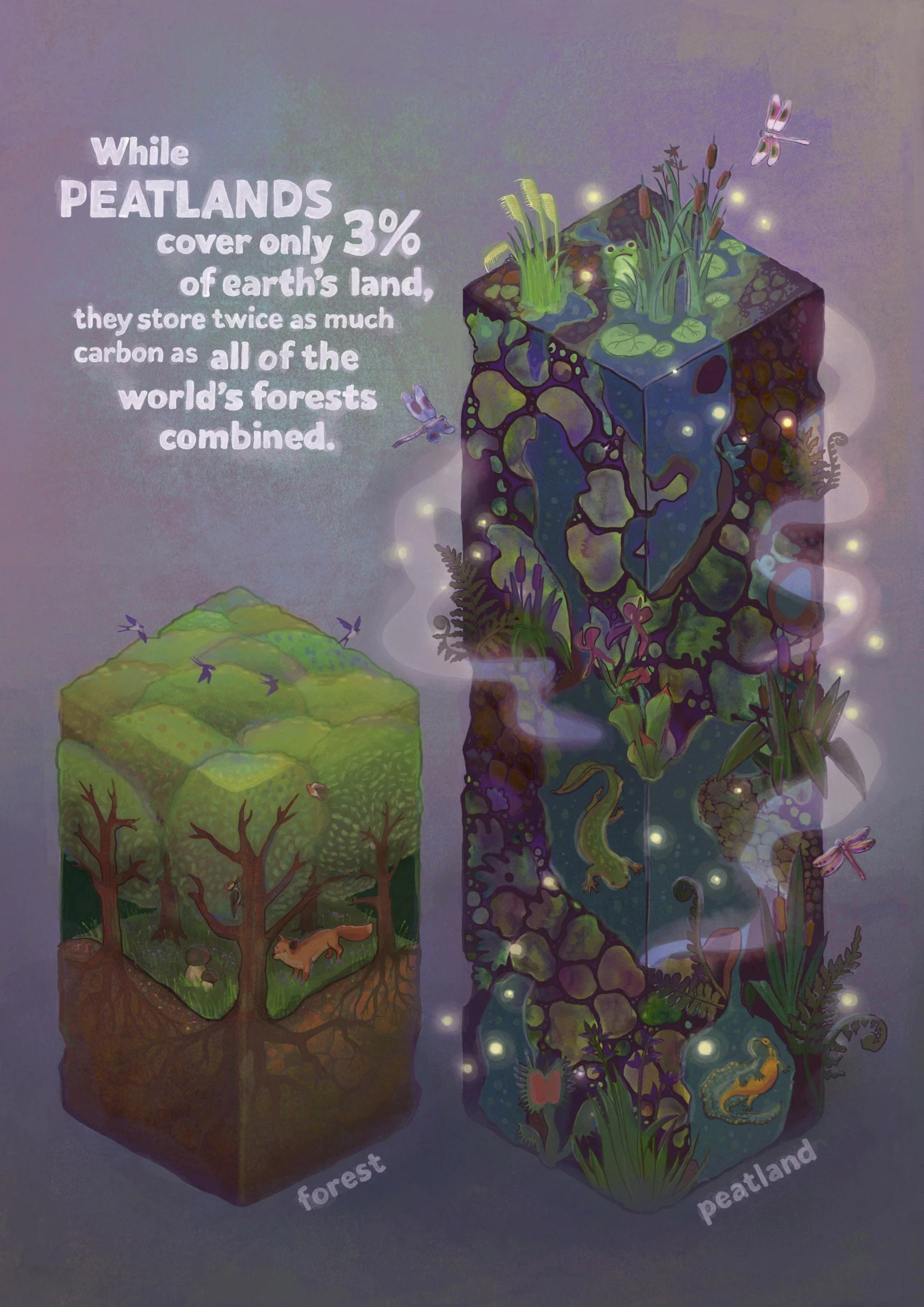
People often think about peatlands as wet places, but when they are dry they become places that attract fire. Zombie fires can smolder underground for weeks, months and in some cases years… waiting in the shadows for the right moment to emerge into the light and reignite the world above. The idea of zombie fires is totally ominous, but also strangely magical in the way that they escape our view and our control. This is why peatlands, when kept wet and healthy, are such important mitigators of fire and drought. With their absorbent properties, they can also help prevent flooding. Peatlands are vital, intelligent regulators of landscapes, they are ecosystems we urgently need to care for and protect.
Wetlands and peatlands are often overlooked in climate discussions. Why do you think they remain so underrepresented, despite their huge ecological importance?
Wetlands and peatlands are often overlooked in climate discussions because of how they have been framed culturally and politically. They are frequently portrayed as wastelands, as “scary” or “empty” places. As landscapes to be drained rather than valued, making their ecological richness easy to ignore. Their degradation is also a form of slow violence: like the frog in hot water metaphor, the impacts unfold gradually and go unnoticed until it’s too late. For example in the Netherlands, soil subsidence from drained peatlands happens slowly, yet over time the land sinks by meters. Restoring peatlands is also slow. It requires landscape-wide agreement and collaboration between many actors, which is far harder to organise than restoration efforts focused on a single plot of land, such as forests.
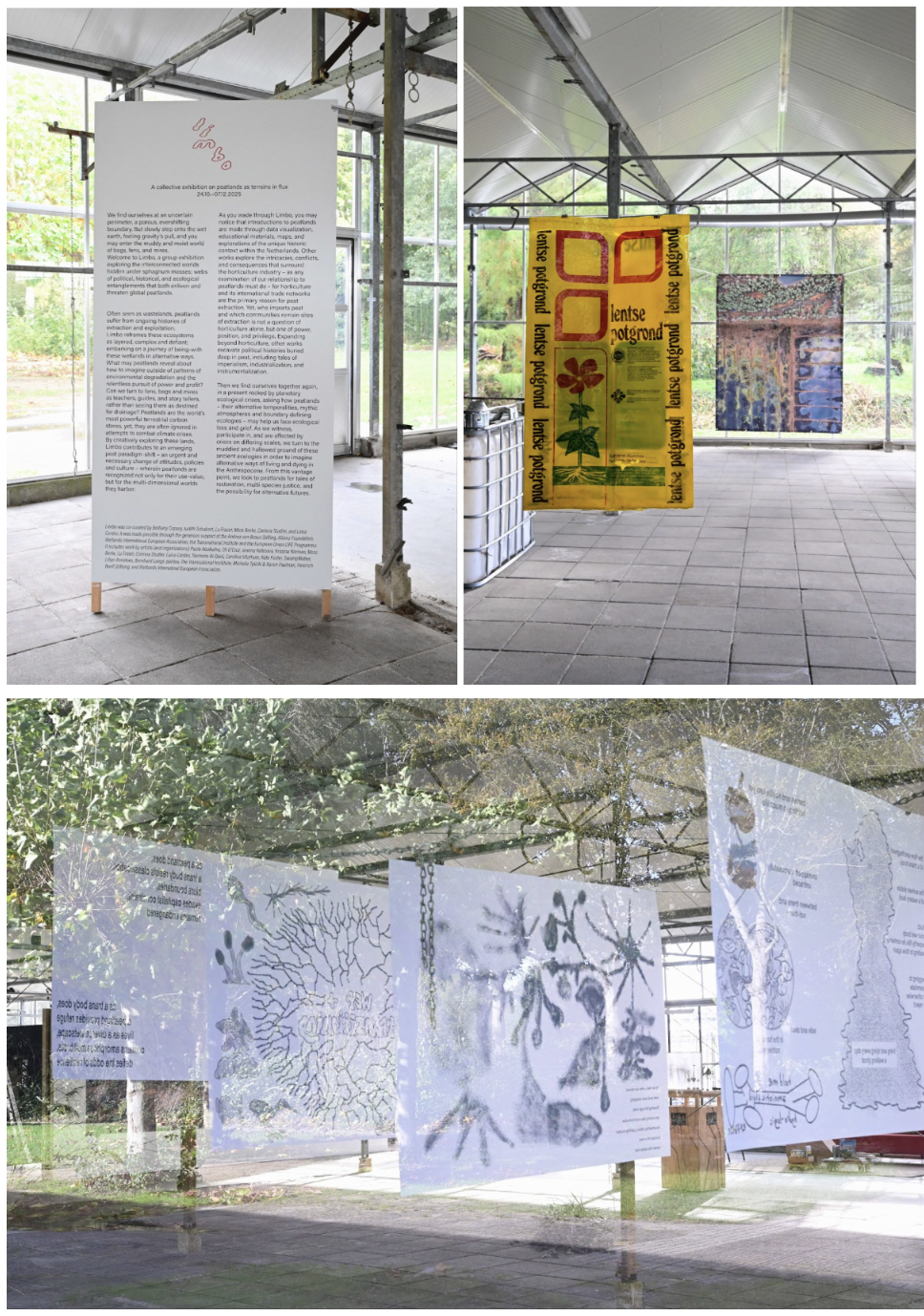
We delivered one of the largest peatland exhibitions to date, Limbo, created in collaboration with De Proef, a former horticultural school in the peat-rich province of Drenthe in the Netherlands. Inspired by the region’s long history of peat extraction, the exhibition brought together over 25 artists from around Europe, working across sound, data, video, and cartography to present peatlands as culturally complex landscapes rather than mere carbon stores. Alongside the exhibition, we hosted side-programming including lino-printing, artist talks, and a paludi dinner, pairing historical context with clear calls to action and significantly expanding the cultural and political visibility of peatland justice in the Netherlands.
The crowdfund supported the exhibition on a limited budget, ensuring fair artist compensation and enabling an interactive public programme, documentation, and a booklet that extends the work beyond the exhibition itself. Through over 200 pledges we reached just over €10,000! We are deeply grateful for the global network of supporters who made this possible.
Images from the Limbo exhibition taken by Caroline Vitzhum
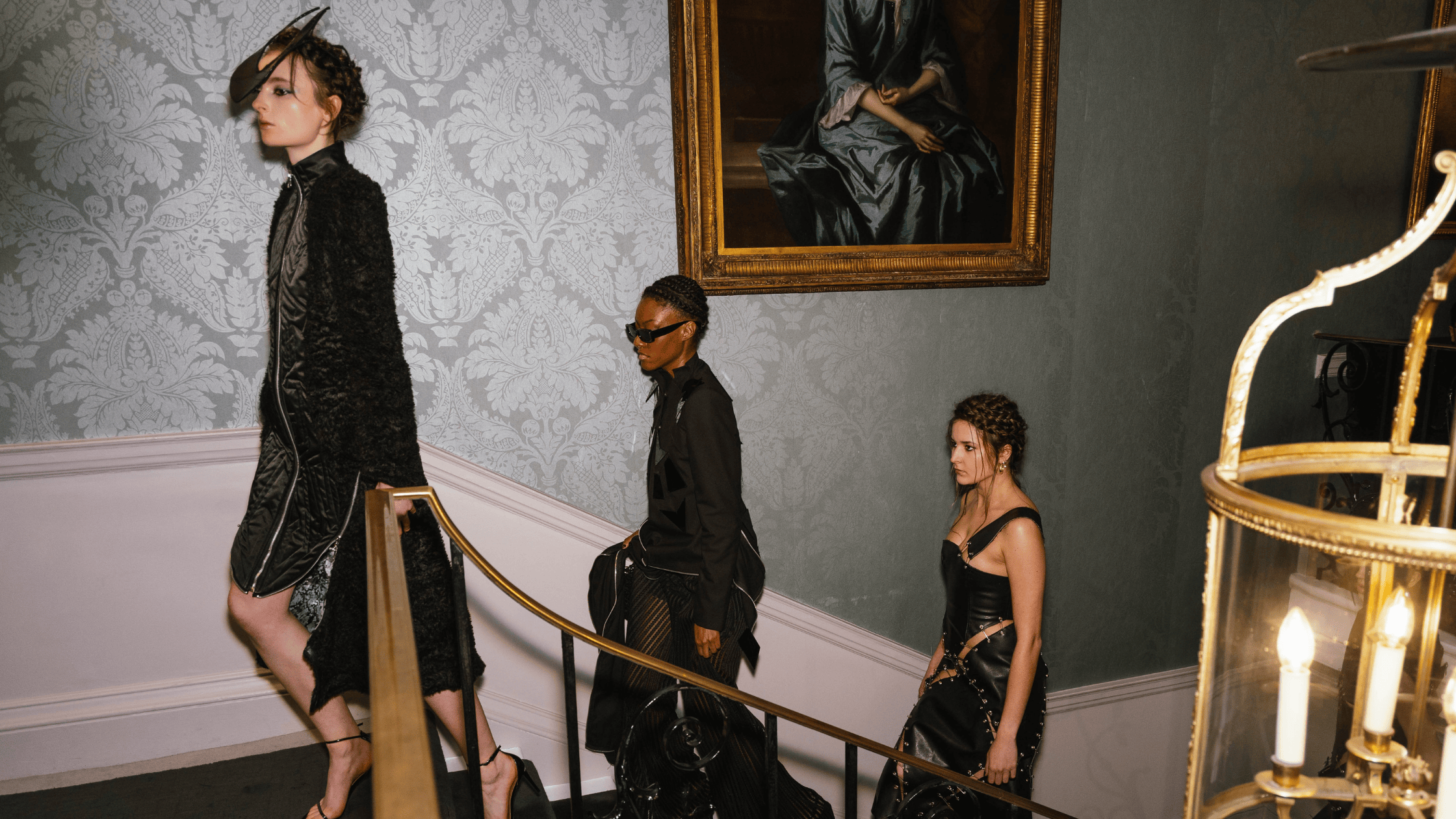
In a powerful meditation on fragmentation, resilience, and the courage required to break through invisible barriers, Young Creators Award winner and Peruvian designer Genaro Rivas unveiled 'A Glass to Break'- his most daring collection to date, during the official London Fashion Week 2026. Presented with the support of Vogue Business x Visa, the collection reflects a bold creative evolution and a renewed commitment to innovative, regenerative design.
We were thrilled to contribute to this visionary showcase alongside fellow material innovators such as BioFluff and Banofi Leather. Many of the standout looks incorporated our BioPuff® wadding, reinforcing the collection’s central dialogue between regeneration, texture, and form. Ponda insulation appeared throughout- from lightweight silhouettes to sculptural padded jackets. These jackets brought together reclaimed ocean-sourced nylon, Ponda insulation, and plant-based fur engineered by Savian at BioFluff, demonstrating the transformative potential of next-generation biomaterials.
Once the whirlwind of fashion week had settled, we sat down with Genaro to talk about design as a vehicle for storytelling, the process of working with emerging biomaterials, and the importance of elevating female founders who are reshaping the future of fashion.
.png)
1. Growing up in Peru clearly shaped your creative lens. How has your background influenced the way you see and create fashion, and which cultural or personal elements continue to inform your aesthetic today?
Growing up in Peru gave me my first language in fashion, long before I understood what fashion was.
I was born in the north of Peru, near a place called Zaña, a town often associated with magic, memory and disappearance. There is something intangible there, a quiet tension between what is visible and what is felt. I think that stayed with me.
Peruvian culture carries a deeply emotional relationship with craft, with colour, with history. It is instinctive rather than intellectual. I grew up surrounded by contrasts: tradition and improvisation, beauty and rawness, scarcity and abundance. That duality continues to shape my work.
But more importantly, my understanding of fashion began through people, through artisans, weavers, women who create with their hands and carry knowledge across generations. That is where my idea of fashion with purpose was born.
Now, being based in London, that foundation has been deconstructed and reassembled. It gave me the courage to express myself.London challenged me to question everything, to find my voice without fear. Peru gave me the roots, but London gave me the courage to fracture them and rebuild them into something new.
What remains constant is the emotional intensity. My work is not decorative, has purpose, looks to.make.impact, comes within me, it is visceral.
2. This collection brought together several female-founded companies. Why was collaborating with women-led innovators essential to your creative process and your values for A Glass to Break?
Working with female-founded companies for A Glass to Break was not just a creative decision, it was a continuation of something that began long before this collection.
My practice has always been rooted in collaboration with women. From artisans and weavers in Peru to female-led ventures working at the forefront of innovation today. There is a shared language there: resilience, care, precision and an intuitive understanding of process.
These collaborations are not only about innovation, they are about values.
For me, fashion with purpose means building ecosystems where creativity generates opportunity, where materials, people and stories are interconnected. Working with women-led companies brought a sense of sensitivity and strength that felt essential to the narrative of the collection. It made the process more human and far more powerful.
.png)
3. Working with emerging biomaterials- such as our BioPuff® wadding and the plant-based fur engineered by BioFluff, opens new creative territory. Bio based materials often come with a different set of performance trade offs compared to traditional materials. How do these characteristics influence the way you approach durability, construction and design?
Working with bio-based materials like BioPuff® by Ponda or plant-based fur by Savian requires a shift in mindset.
These materials don’t behave like traditional ones, and instead of forcing them into existing systems, I approach them with curiosity. Almost like learning a new language.
They influence everything: construction, weight, movement, even the emotional presence of the garment. Some demand precision, others invite softness, unpredictability, or tension.
For me, durability is not only about resistance, but about meaning. If a material can exist with integrity, if it can tell a story and evolve, then it already holds a form of longevity.
Working with Ponda was particularly exciting because it allowed me to rethink insulation not as something hidden, but as something expressive, sculptural, almost alive within the garment.
4. A Glass to Break explores powerful themes of fragmentation, resilience, and transformation. How did these ideas shape your material choices, silhouettes, and collaborations throughout the collection?
A Glass to Break exists in a moment of tension, just before something fractures.
That idea shaped everything. The silhouettes move between control and release, between containment and collapse. There is a constant pressure within the garments, as if they are holding something that is about to break.
Material choices followed that same logic. Soft and rigid elements coexist. Surfaces appear intact, but underneath there is disruption.
Collaboration became part of that narrative. Each material, each partner brought a different energy and instead of smoothing those differences, I allowed them to coexist.
The collection is not about perfection. It is about transformation through rupture.
.png)
5. Looking ahead, what role do you believe regenerative or bio-fabricated materials will play in the future of mainstream fashion? How close do you think we are to that shift becoming the norm?
I don’t see bio-based or regenerative materials as a trend, I see them as inevitable. And the process starts with the sketching, how we as designers want to innovate, make a difference
The industry is already shifting, but slowly. What materials like BioPuff® represent is not just an alternative, but a new way of thinking about fashion, one that is more responsible, but also more creatively open.
These materials allow us to imagine new textures, new behaviours, new forms.
We are closer than we think, but the transition will not be linear. It will come through designers, innovators and collaborations willing to challenge existing systems and rebuild them differently.
6. And finally-if you had to choose…what is your favourite piece from the collection, and what makes it especially meaningful to you?
If I had to choose one piece, it would the beginning and the finale. The monogram coat and the shard dress.
The monogram coat, embodies the spirit of my brand. Innovation, sustainability, social impact all contained in edginess. You have the mix of materials, the design and how it looked.
The shard dress feels like a frozen moment, something broken, but held in place. There is fragility in it, but also strength.
For me, it represents the core of the collection: the idea that beauty does not come from perfection, but from what survives transformation.
Follow Genaro's journey:
.png)
.png)